I have had the pleasure of meeting the Modern Day Lawrence Family. Sadly, as I write Isabel (Izzy) Lawrence, daughter of the 7th and possibly last Baronet, Sir Henry Peter Lawrence has passed away. Isabel, an Oxford graduate visited the school during Ramesh Venkateshwaran’s headship and you will see below photos of her visit. Sir Henry Peter Lawrence as I write is ailing and his son Christopher Cosmo Lawrence, a lovely gentleman may not apply for the Baronetcy which he has a legal right to. Very few people are granted or accept such a dignity as all it confers is the right to use the honorific ‘Sir’ reflecting a past act of valour of an ancestor. Izzie was a very beautiful, kind and courteous lady who I had the privilege to meet and whilst I was sad to attend her Service of Thanksgiving, I was happy to see many of her friends of all ethnicities happily recalling the kindness she bestowed upon them.
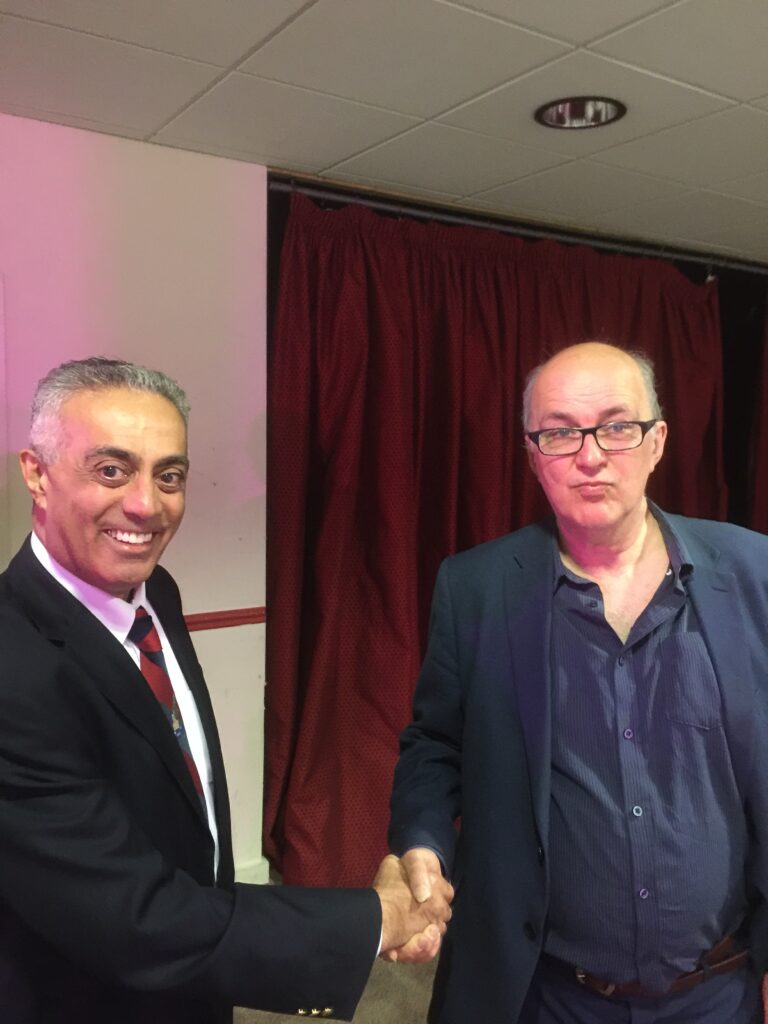
Below is a photo of Jitu with Sir Henry Peter Lawrence
Below are photos of Isabelle Lawrence during her visit to Lovedale in 2005


Below are photos of Christopher Lawrence


Below is a photo of Jitu with OL Mira and Penelope Lawrence mother of Izzie and a copy of the Service of Thanksgiving for the life of Isabelle


The Lawrence Family and the Baronetcy
I will start with Colonel Alexander Lawrence, father of the first Sir Henry Lawrence. He was in the British Army and distinguished himself in many wars including the storming of Tipu Sultan’s fort in Seringapatam, India.
His son was Sir Henry Lawrence who was born in Matura, in Sri Lanka which in those days was called Ceylon. He was killed defending the Residency in Lucknow.
The First Baronetcy was awarded to Sir Alexander Hutchinson Lawrence, a civil servant in the East India Company, in honour of his father. See my Post on Lady Honoria and you will notice that Alexander Hutchinson was subject to extremely harsh treatment by his mother and as a result, behaved erratically. Following an argument with his wife Alice Kennedy he rode ‘into the mountains’ from Simla. He fell over a thousand feet to his death aged 26.
The Second Baronet was Sir Henry Hayes Lawrence, son of Sir Alexander Hutchinson. However, Sir Henry Hayes did not have any male children so
The Third Baronet was Sir Henry Waldemar Lawrence, brother of Sir Alexander Hutchinson. Henry Waldemar was the first white child born in Nepal.
The Fourth Baronet was Sir Alexander Waldemar Lawrence. This gentleman was a politician and Chief Assistant Solicitor to the Treasury.
The Fifth Baronet was Sir Henry Eustace Lawrence, who had mental issues and remained single.
The Sixth Baronet was Sir John Waldemar Lawrence, brother of Sir Henry Eustace. Sir John had no children. Read this obituary to Sir John who was joint author of the journals of Honoria Lawrence, India Observed 1837-1854.
The Seventh Baronet is Sir Henry Peter Lawrence, son of George Lawrence. George Lawrence should have become the Seventh Baronet as he was the brother of Sir John but alas, he died before Sir John and hence we have Sir Henry Peter. I have met Sir Henry Peter who was an academic and specialised in ‘Physics and Engineering in Medicine’.
Sir Henry Peter’s son is Christopher Lawrence an Oscar winning Special Effects man in Hollywood movies.
Note: A baronet is not regarded as part of the nobility such as Duke, Marquess, Earl, Viscount and Barron. A baronet is regarded as a commoner and all that it legally entitles one to do is use the honorific ‘Sir’ before one’s name and such a ‘dignity’ can be passed on through the male line.
In India a separate honour was given entitling the recipient to use the honorific ‘Sir’, e.g. Sir Hari Singh, Maharaja of Kashmir. The last of the Indian recipients was Sir Padmanabhadasa Sree Chithira Thirunal Balarama Varma of Travancore upon whose death such an honour became dormant.
In the Indian Constitution Right to Equality (Articles 14 – 18):
The right to equality provides for the equal treatment of everyone before the law, prevents discrimination on various grounds, treats everybody as equals in matters of public employment, and abolishes untouchability, and titles (such as Sir, Rai Bahadur, etc.).