British by Birth, Indian by Heart: A Cultural Reversal
Among the students at Lawrence School Lovedale were two brothers who stood apart—not just because of their background, but because of the lives they would go on to lead. My friends for over 60 years, Michael and Nicholas Horsburgh, British by birth, each forged unique paths deeply rooted in their connection to India. Michael, the elder, carved out a distinguished international career in hotel management, overseeing prestigious five-star hotels across the UK, India, Thailand, Singapore, and finally Beijing. Nicholas, the younger, took a different road—devoting himself to education in India. He ran Neel Bagh, a school for underprivileged children, and became a beloved author of children’s books, many of which are still used today as English textbooks throughout the Commonwealth.
I have been privileged to attend many family functions of the two brothers in the U.K. and I also attended the wedding of Aditi, Michael and Rajika’s daughter in Delhi. In addition, I also attended the wedding of Kate, Nick’s daughter in July 2002.
At a time when most of the Indian boys at Lovedale were striving to appear more British—adopting mannerisms, accents, and customs to distance themselves from their roots—Michael and Nicholas quietly defied the norm. British by birth, they had no need to perform the identity their peers aspired to. Yet rather than reinforce the colonial ideal, they turned toward India with open hearts. They embraced its languages, traditions, and rhythms of life not out of obligation, but genuine affection. India was not foreign to them—it was home. That connection has never faded. To this day, they remain frequent visitors and cherished guests, living proof that identity can be chosen with love, not just inherited by lineage.
Their connection to India was not only personal but generational. Michael married a lovely Indian lady, Rajika, who had also attended the same school, further deepening his bond with the country he loved. Nicholas, meanwhile, married an English lady, Penny, who shared his passion for education and worked alongside him in running Neel Bagh. In both families, this love for India did not end with the brothers—it was passed down with quiet pride. Their children and grandchildren, shaped by stories, visits, and enduring relationships, continue to nurture the legacy of cultural openness, respect, and affection that Michael and Nicholas lived so fully.
I write this as someone who shared their journey in spirit. I, Jitu Savani, a third-generation Kenyan Indian, was also sent to that same boarding school—ostensibly to receive an Indian education. What I found instead was an institution producing not proud young Indians, but pseudo-Britishers, keen to shed their own heritage in favour of an imported identity. In Michael and Nicholas, I found kindred spirits—people who, like me, chose to embrace India rather than escape it. Our bond was not just forged in the classrooms or on the school grounds, but in a shared yearning for authenticity and belonging.
Their father, David Horsburgh, had arrived in India during World War II and, after his demobilisation, he returned to England to do a degree in Sanskrit and Pali at the School of Oriental Studies, London University. His son Nicholas and later his granddaughter Kate both completed their degrees at SOAS. …. David travelled to India in 1950, with his wife, Doreen, daughter Anne and Michael, to remain in the land he had come to love. An educator like his younger son, David spent most of his life nurturing minds in India, ultimately laying down roots so deep that he rests eternally in the Catholic cemetery in Bangalore. His life, like those of his sons, was a quiet act of devotion to a country that had welcomed him—and to which he gave so much in return.
It was a striking irony that we, well-off Indian schoolchildren, proudly recited Shakespeare and George Bernard Shaw—icons of the Western literary world—while remaining entirely unaware of the Panchatantra, one of the oldest and richest collections of Indian fables. The deeper irony was that it took an Englishman, David Horsburgh—who, after serving in the British Army during World War II, chose to settle in India out of genuine love for the country—to introduce us to this neglected part of our own heritage. At the school he ran for underprivileged children, David staged plays based on the Panchatantra, giving those students not just an education but a connection to India’s ancient storytelling tradition. That we needed a British educator to awaken our pride in Indian literature says much about the enduring legacies of colonialism—and the redemptive power of cross-cultural respect.
In a postcolonial world still reckoning with the legacies of empire, the story of the Horsburgh family offers a powerful reversal of expected narratives. At a time and in a place where cultural aspiration often flowed in one direction—toward the colonial ideal—this family chose another path. Their lives are a testament to the possibility of mutual respect and deep cross-cultural connection, grounded not in dominance or assimilation, but in genuine love and engagement. They remind us that identity is not simply inherited—it is chosen, shaped by the places and people we hold dear. And in choosing to belong to India, they taught many of us what it truly means to call a place home.
Here is an article relating to David Horsburgh:
https://www.libed.org.uk/index.php/articles/304-neel-bagh-where-the-mind-is-without-fear
Here is a video that expresses my thoughts about the family complete with the parents David and Doreen, my friends Michael and Nicholas and their sister Ann. One of the privileges of my life was to meet all the family (Dad David while I was still at School).
Here are some photos of the two brothers that evidences not only a complete blending in with life in India and Lawrence School but also our long association
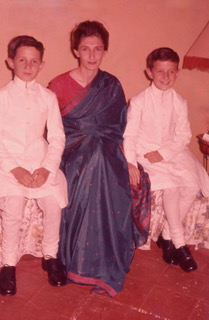
In the 3 photos below: First one Nick with Ramesh, Iyengar’s son, 2nd Nick on parallel bars and 3rd Mike on parallel bars The brothers were brilliant sportsmen!
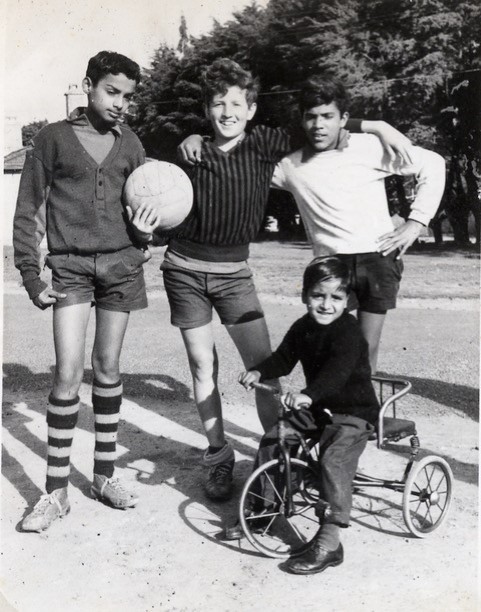
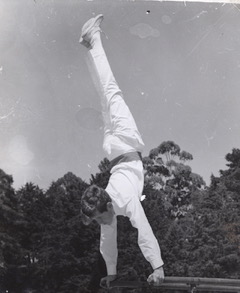
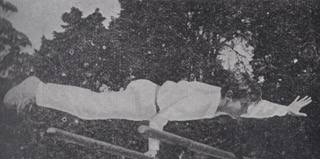
In the photos below: 1st one top row Nick 2nd from left Mike 4th from left I am 2nd from left bottom. Next Photo I am 1st from left, Nick 4th from left, Mike between 2 masters. 3rd photo Nick top row 2nd from left, Mike next Row Ist Left and I am 3rd row third from left
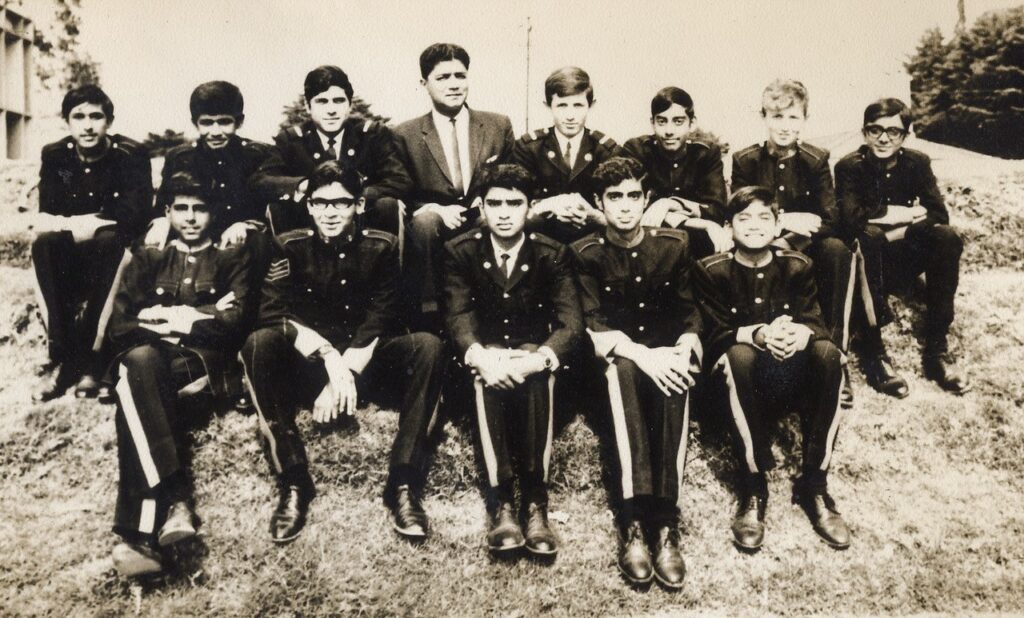
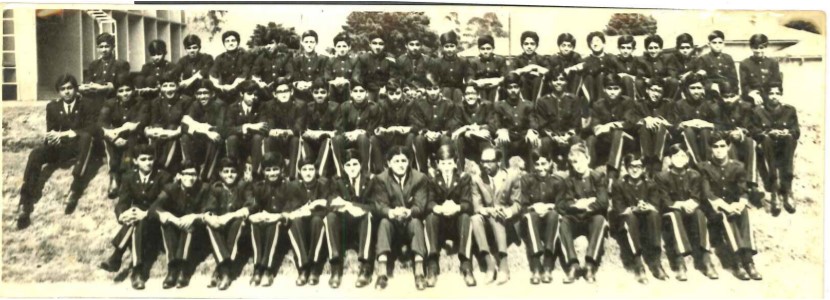
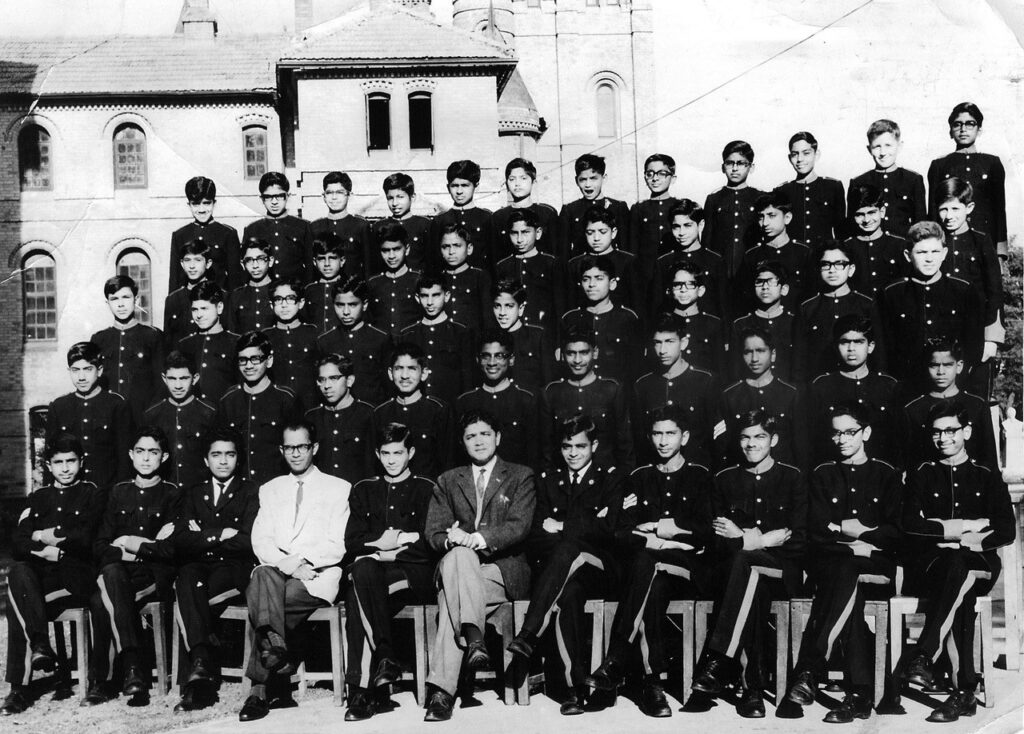
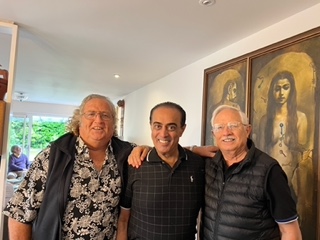
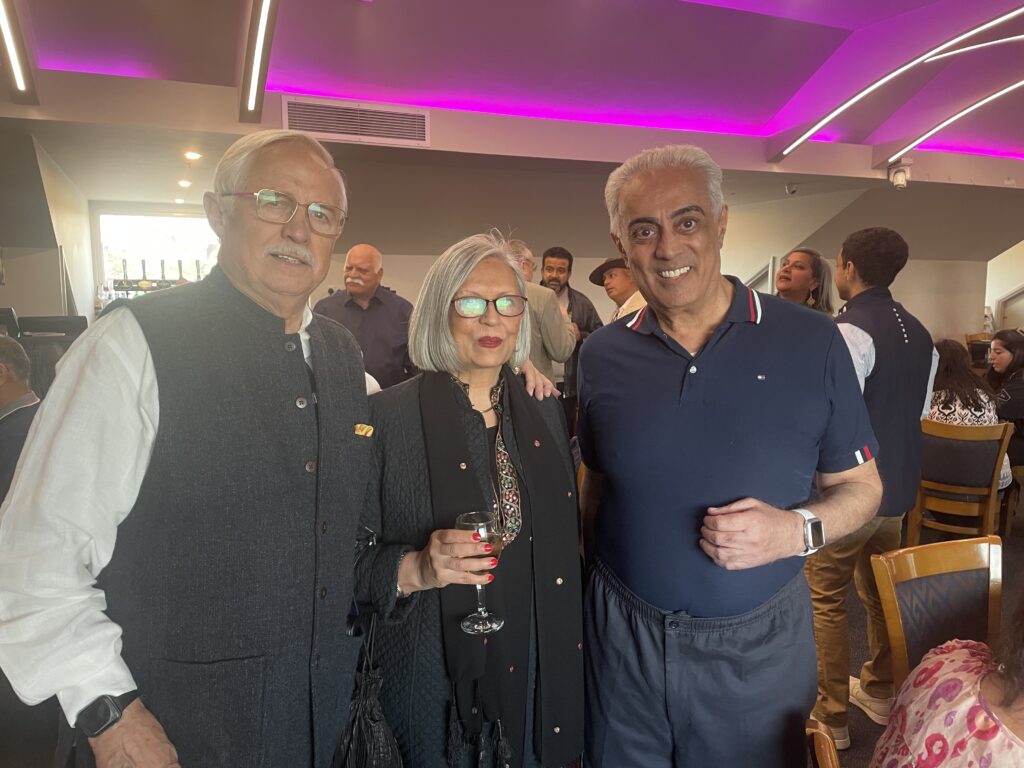
In the photos below Three friends in UK and Jitu with Mike and Rajika
Below: Nick and Jitu at The Oval Cricket Ground
