Note: There are 6 Pages about Mac. Please read in the following order:
Mac – Wilfred Joseph McMahon – Introduction
Mac – Wilfred Joseph McMahon – Origin and Early Years
Mac – Wilfred Joseph McMahon – The Stalwart Who Never Was
Mac – Wilfred Joseph McMahon – The Post-Lovedale Years
Mac – Wilfred Joseph McMahon – From Rugby to Ruin
Mac – Wilfred Joseph McMahon – The Quintessential Anglo-Indian
The Stalwart Who Never Was. Part 1- Bogus Sophisticate Shunted from Mhow Railway Colony to Lovedale — Gambled Hard, Left Skint and Stranded
This is by far the most important page of my blog. My father had spent a fortune sending me to Lovedale for what he thought was an elite INDIAN education. In this respect, he was relying, expressly, on the principle of ‘in loco parentis’ a Latin phrase translating as ‘In Place of a Parent’. The one person who had the task of being in place of my parent and turned that principle on its head was Wilfred Joseph McMahon.
In 1960, Wilfred Joseph McMahon was appointed Housemaster of Nilgiri House to which my brother was sent in that year as a ten year old. In accordance with tradition of ensuring siblings went to the same House, I came under Mac’s care as a 13 year old in 1965. for me, the following 4 years, 1965 to 1968 were disastrous! All the hard-work and effort my father put in to afford the alleged elite Indian education was rendered valueless and all the treasure he invested was laid waste by the velvet tongued fraud, Mac.
I last saw him in 1968, in my final year at Lawrence School. At that time the word ‘mystique’ was the ‘best fit’ attribute that could be applied to Mac. When I joined the school as a 6 year old at the beginning of 1958, fewer than 10 years after Independence, Indians had still not grasped that they were Independent and were not obligated to hold our former colonial masters in high esteem. Said former colonial masters were a highly selective and powerful administrative body, often described as the “steel frame” of British India. Its members governed vast territories with immense authority, earning them a quasi-mythical reputation. The term “Heaven-born” emphasized their perceived superiority, as if they were divinely ordained to rule. It also alluded to their exclusivity—only a few hundred British officers managed an empire of hundreds of millions. For some mysterious reason, Mac was slotted into the ‘Heaven Born’ category.
Far from being the suave, sophisticated character of high breeding and class that everybody assumed he was, and he never ever disabused anybody from that belief, truth was that he came from a grubby, dirt poor Anglo-Indian Railway Colony in Mhow. None of us had heard of Railway Colonies but over the course of my research, it has emerged that such colonies were set up to ghettoise Anglo-Indians in low skill low wage jobs reserved specifically for that community.
Let me again set out the family Tree of Mac. I have gone back to his grandfather Joseph and the 1890s. Please see the Tree below and the explanation that follows:
,
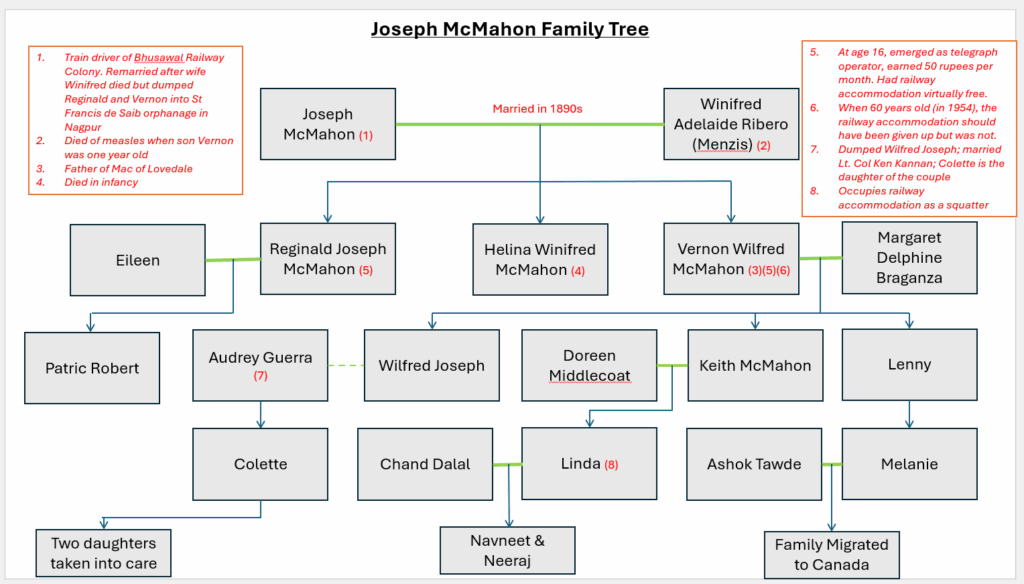
Mac’s grandfather, Joseph McMahon was an Anglo-Indian train driver employed by the Greater Indian Peninsular Railway in Bhusawal, located in present day Maharashtra, in the 1880s and 1890s.
Joseph married Winifred Adelaide Ribero who also went by surname Menzies. The couple were blessed with 3 children; Reginald Joseph, Helena Winifred who died in infancy in 1890, and Vernon Wilfred. It was Vernon who fathered Mac, the subject of this Page. When Vernon was a year old, he lost his mother to measles. Joseph remarried but dumped Reginald and Vernon into St. Francis de Saib Orphanage in Nagpur. This was not unusual in the Anglo-Indian community; nobody would marry a widower if the widower’s children came as part of the package.
Emerging from the orphanage at sixteen in the early 1900s, the brothers’ rudimentary education landed them work as telegraph operators in the Railway Colony of Mhow, a job that required little beyond basic reading and writing. At their peak, they earned just 50 rupees a month, but their Anglo-Indian status secured them reserved jobs and free housing and their children attended Sacred Heart School, run by the local church. For Vernon’s son, Wilfred Joseph, that school became the launchpad for an extraordinary journey.
Educated at Sacred Heart, Wilfred’s academic promise earned him a church scholarship to Agra University, where he earned his Bachelor’s degree. True to the unspoken contract of such opportunities, he returned to teach at his alma mater—repaying his debt in chalk dust and dedication. The church, recognizing his potential, then sponsored his Bachelor of Teaching at Ajmer Teacher Training College and later his Master’s at Agra university, each time with the expectation that he would return to Sacred Heart. And he did—until 1956, when his path took a historic turn.
That year, Wilfred Joseph joined Lawrence School Lovedale, an institution with a deeply exclusionary past. Founded by Sir Henry Lawrence for orphans of European soldiers, it had long been a place where even Anglo-Indians were barred, and Catholics admitted only reluctantly. Originally a trade school for the sons of rank-and-file soldiers, it was far from academic—until the winds of change began to blow in the years before Independence. By the time Wilfred arrived, Lovedale was shedding its old skin, transforming into a proper academic institution. With his rare qualifications and years of experience, he was the ideal figure to help steer this metamorphosis.
For 19 years, Wilfred Joseph taught at Lovedale, leaving his mark on one of India’s most storied schools. His journey—from the Railway Colony’s humble quarters to the halls of a once-elitist institution—mirrors the broader shifts of his era: a nation outgrowing its colonial hierarchies, and a man whose talent for teaching English and Literature made him into a cult figure for many.
However, this is my blog and as far as I am concerned the man from the Railway Colony, in his capacity as a Housemaster proved a monumental disaster for he abrogated his responsibilities as a Housemaster and sauntered off to the local casino, the Lawley Institute 7 days a week leaving his wards, I included, in the care of older children best described as thugs.
Thus, it is my contention that Mac the man from an Anglo-Indian Railway Colony in Mhow shouldn’t have been let loose on a bewildered educational institution in Independent India, that had been Independent for fewer than 9 years when Mac joined at the beginning of 1956. He was 31 years old at the time and unlike countless non Anglo-Indians his age, he had not played any part in the Independence movement. His ilk were loyal to the British colonials and, within the Railway Colony he was part of, his community carried on leading comfortable though not luxurious lives, never expecting a change in regime and remaining loyal to the British throughout. He brought with him all the vices of a Railway Colony including a feeling of disdain for ordinary Indians and he went about his business with an attitude of superiority. He lived in the expectation that upon the retirement of the then Headmaster K.I. Thomas, he, Mac, would be given the post of Headmaster. When Headmaster K.I. Thomas was forced to retire, fortunately, the Board exercised better judgement and the post was offered to Mr. L.A. Vyas a former teacher and Senior Master. Mr Vyas had two Masters degrees from USA, had taught at Doon School, and had joined Lovedale 3 years before Mac. Vyas had taught Physics, Chemistry, Maths and Hindi. Vyas was also had a stint as the Headmaster of a minor boarding school, Hansraj Morarji School in Bombay, before returning as Headmaster to Lovedale.
During the 19 years Mac spent in Lovedale, he got away with behaviour that should have led to his immediate dismissal. However, Mac not only survived but thrived, ruining the lives of countless pupils he should have been Housemaster to. I cannot emphasise the word Housemaster enough. The unacceptable behaviour included being absent from the school from 1.30 PM to nearly midnight Monday to Friday and from early AM to around midnight or later on Saturdays and Sundays. During his absences from his duties as Housemaster, control of the house (Nilgiri) was left in the hands of prefects/ captains/ monitors, all of whom were 16 to 17 years of age. These ‘older’ children would not only use disproportionate violence but would also take the opportunity to steal and torture. Mac couldn’t care less as it was one set of unwashed Indians who were torturing another! Like a lot of his ilk, Mac regarded himself as superior, not having a clue that in the real world, outside the Railway Colony, the opposite was true. While absent from school, Mac was gambling at the Lawley Institute and thereby bringing the School into disrepute. That was reason enough dismiss him for it is inconceivable that Headmaster K.I. Thomas didn’t know what Mac was up to. Every man, woman and child in Lovedale knew about Mac’s activities but that had no consequences for Mac. Interestingly, I spoke to pupils from the 1990 batch, most of whom would not have been born when Mac left Lovedale, and as soon as his name was mentioned, an association with the Lawley Institution came out! Perhaps Headmaster K.I. Thomas felt intimidated as he didn’t know about Mac’s humble Railway Colony origins and assumed he was from a high-end well established family.
Vyas wasn’t as pliable as Thomas and soon had the measure of Mac. The latter had no choice but to resign and from there he kept slipping deeper and deeper into a cesspit of his own making until the 23 of June 1991 when he finally kicked the bucket as an alcoholic pauper living on the generosity of others.
I will expose Mac for what he was; dishonest and ruinous to the lives of unsuspecting ordinary everyday Indians whose only fault was to come under the stewardship of this vermin.
Let me set out the the words of Nobel Laureate Naipaul which express the way I feel about Anglo-Indian Mac and his ilk. It is appropriate I use the words of Naipaul because his Nobel was awarded for Literature, a subject Mac taught and for which he was accorded legendary status: of the Anglo-Indian community Naipaul observed:
‘this is a mimicry not of England, a real country, but of the fairy-tale land of Anglo-India, of clubs and sahibs and syces and bearers. It is as if an entire society had fallen for the casual confidence of a trickster. Casual because the trickster had gone away, losing interest in his joke, but leaving the Anglo-Indians flocking to the churches of Calcutta on a Sunday morning to assert an alien faith more or less abandoned in its country of origin….Leaving ‘civil lines’, ‘cantonments’, leaving people ‘going off to the hills’; magic words now fully possessed, now spoken as of right, in what is now at last Indian Anglo-India, where smartness can be found in the cosy proletarian trivialities of Women’s Own and the Daily Mirror, and where Mrs. Hauksbee, a Millamant of the suburbs, is still the arbiter of elegance.‘
PLEASE SEE MY PAGE Anglo-Indians, Naipaul and Jitu Savani
Here is the story of Mac of Lovedale from the arrival to Mhow of his father Vernon onwards:
On the 16 of January 1924, a humble telegraphist Vernon Wilfred Joseph McMahon aged 29, son of Joseph McMahon married Margaret Delphine Braganza, aged 22 daughter of John Braganza. The witness for Vernon was Robert Stanislaw Woodman and the witness for Margaret was Edward Titus. Telegraphist Vernon was a Eurasian, and, as his surname suggests, of Irish ancestry. Margaret was, as her surname suggests, a Mestizo, which is to say, Indo-Portuguese. Margaret could even have been a Luso-Indian, a term reserved for those the British thought were Indians masquerading as Portuguese.
On the same day, telegraphist Victor Egidius D’Souza, aged 26, son of Cajetan Xavier D’Souza married Annie Braganza, aged 19, daughter of John Braganza. The witnesses were Robert Stanislaw Woodman and Edward Titus. Obviously Margaret and Annie were sisters. However, whereas Margaret signed her own name, John Braganza signed on behalf of Annie suggesting she may have been illiterate.
On the 28th of February 1925, telegraphist Vernon Wilfred Joseph McMahon and Margaret Delphine McMahon were blessed with a baby boy, Wilfred Joseph who was baptised on 7 March 1925. This was the beginning of the life of Mac of Lovedale.
Next day, on 1 March 1925, telegraphist Victor Egidius DeSouza and Ann DeSouza were blessed with a baby girl Phyllis Marie who was baptised on 1 March 1925.
It is evident that two sisters, Margaret and Annie, married on the same day in the same year produced children in the year following their marriages, within hours of each other! Thus Wilfred had a cousin from his mother’s side within a day of his birth.
I have provided documentary evidence of the wedding of Mac’s parents and his own birth and baptism details in Mac- Origin and Early Years. I attach below another document showing the birth details of various other Anglo-Indians in Mac’s circle, including Patrick Robert McMahon, son of Vernon’s brother Reginald and hence Mac’s ‘first’ cousin. This shows the closeness of Mac to the Anglo-Indian community and more important the Railway Colony:
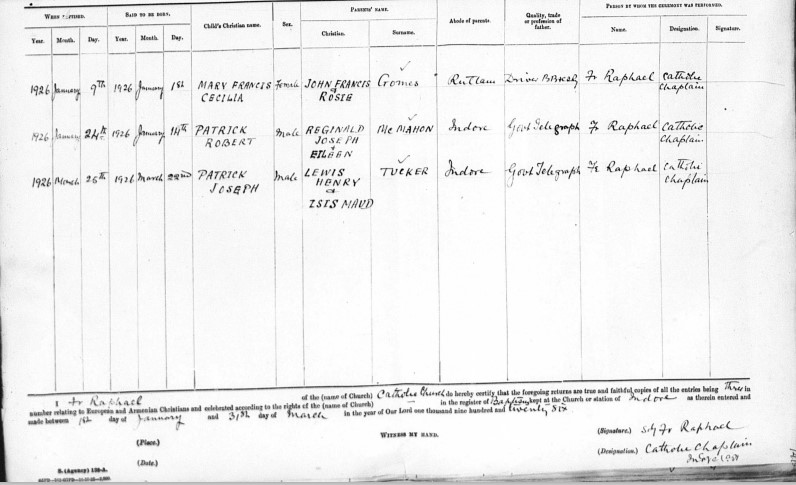
As is shown, another telegraphist, Lewis Henry Tucker and his wife Isis Maud Tucker were blessed with a baby boy Patrick Joseph on 22 of March 1926 who was baptised on 25 of March 1926.
One might also observe that John Francis Gomes and his wife Rose were blessed with a baby girl Mary Francis Cecilia on 1 of January 1926 who was baptised on 9 of January 1926.
Whereas the abode of all other parties is stated to be Indore, the abode of the parents of Mary Francis Cecelia is stated to be Rutlam and John Francis is stated to be a Driver BBK. This is important as Rutlam is a Railway Colony 85 miles from Indore , which has two railway schools and Driver BBK stands for Driver Barabankhim Railway Junction.
The religious matters related to all the above events, including the marriage of Mac’s parents and his own birth were presided over by Father Raphael, Catholic Chaplain. The initials after Father Raphael, OMC stand for Order of Friars Minor Conventual which is a male religious fraternity in the Roman Catholic Church that is a branch of the Franciscans.
It is easy to observe that the Railway Colonies were stuffed full of what in modern parlance would be called Indo-British as well as Indo- Portuguese. Collectively, they were called Anglo-Indians. They intermarried, worshipped in the same churches and above all, were totally loyal to the British. There were never ever any local potentates like Maharajas they could be loyal to. Mac’s pupils will be surprised to learn that Mac had Portuguese DNA in him!
Having set out Mac’s background let me make the following observations:
The Mestizos (mixed Portuguese and Indian) were Catholics, and their culture largely European. Subcategories of Portuguese along racial lines were never definitive, but the elite were always European born. To the British all Portuguese were a ‘mongrel‘ race and the terms Indo-Portuguese, Mestizo, and Portuguese were often used interchangeably. Luso-Indian was reserved for those the British thought were Indians masquerading as Portuguese.
By an 1870 Parliamentary statute, Eurasians, what in modern parlance are Anglo-Indians were labelled ‘Statutory Natives of India.‘ Thus, Eurasians had become an Indian minority.
Charles Raikes (1812 – 1885) former North-West Provinces‘ commissioner and judge, spoke with the authority of long Indian experience and high office. Raikes directed his attention to the failings of Indo-Portuguese Eurasians, describing Indo-Portuguese clerks anywhere in India as: ‘vegetating rather than living, with the vices of the European added to the superstitions of the heathen.‘ Rather than limit himself to personal experience he also pronounced on events a century before he had ever set foot in India. Madras was lost to France because the British force, led by an ignorant Swede ‘was half composed of a black, degenerate, wretched race of half-caste Portuguese, utterly destitute of fighting qualities.‘ In short, Eurasian,‘ became shorthand for illegitimacy, immorality, weakness and criminality; more so when of Portuguese stock. This affected the status of Eurasians in nineteenth century India, justifying their exclusion from high-ranking positions, and diminishing their worth in Indian eyes. It was this same Raikes who described Sir Henry Lawrence as a mere Bengal civilian following Lawrence’s catastrophic performance during the so called ‘Mutiny’!
THREE PAGES, this Page, my Page titled ‘About Me‘ and my Page titled ‘From Rugby to Ruin‘ will certainly show that Mac, partly of Portuguese origin was utterly destitute of fighting qualities in confronting bullies. His attitude was ‘ignore the problem and it will go away; and it did, for him! But at what cost to his wards and their parents? Read on!
Edgar Thurston, CIE (1855– 12 October 1935) superintendent at the Madras Government Museum who contributed to studies in the zoology and ethnology had this to say:
Eurasians were poor and in debt not because they were low paid but because they were stupid, irresponsible, and unable to subordinate animal appetite to reason, forethought and prudence. Whilst it would be unfair to brush the entire Eurasian community with this description, as far as Mac was concerned, it ‘summed him up to a tee’. I will demonstrate that he was poor and in debt not because he was low paid but because he was stupid, irresponsible and unable to subordinate animal appetite to reason, forethought and prudence.
All of the above is relevant as the Eurasians (Anglo-Indians), who were not allowed to own land, were largely ghettoised in what were known as Railway Colonies and to quote Cedric Dover, a well known Eurasian intellectual and author who was convinced that the Eurasians had suffered unjustly: ‘So, the community which had served the Fatherland so well degenerated into a community of clerks, railwaymen and telegraphists, forced to be content with employment in the subordinate grades of the Company‘s services.’ The ‘Company’ here refers to the East India Company.
Wilfred Joseph McMahon was very much part of a Railway Colony. Within such colonies, there was a hierarchy: top of the pecking order in terms of status were the British on temporary assignment to India, next came ‘Domiciled Europeans’ which referred to Europeans without any Indian blood who had settled in India. This was followed by Eurasians with a British heritage. Then came the Mestizo, who had a bloodline of the Portuguese. This was followed by Luso-Indians who were Indians passing themselves as of Portuguese heritage and finally came Indian Christians trying to pass themselves off as Eurasians. Even within the Eurasian community, there was a hierarchy: the fairer-skinned one was, the higher the status. Wilfred Joseph would have come very low down the scale not only because he wasn’t very fair (he was of my hue) but his Mestizo lineage would have counted against him. Note what Raikes (above) says about people of Portuguese stock and Wilfred Joseph was partly of Portuguese stock. Note also that that these colonies acted as sites to stem the miscegenation of European culture through remaining closed; having their own institutes for dances and socialising, their own schools and their own domestic arrangements as far as housing and servants quarters were concerned.
Mac’s college education was at Agra University. This simple sentence may seem innocuous but you will note from ‘Let’s Twist Again’ within my Page ‘Anglo Indian Documentaries and Research Papers‘ the following details relating to Agra:
- Agra, where Mac got his Masters Degree had a big community of Anglo Indians – every second house in ‘Cantonment’ had Anglo Indians
- There was a dearth of administrators (so Anglo-Indians fitted in perfectly)
- Post and Telegraphs was what they excelled at (Mac’s father was a telegraphist)
- It was a close knit community
- Phillip Carville mentions: We were the striking feature of the City
- The ladies dressed : hats, high healed shoes
- They did not speak the local language
- The community was respected for the dress culture and behaviour
So right up to his Masters Degree Mac was in his comfort zone of the Anglo-Indian community.
Based on what I have set out so far, if I were to write a mini essay based on Mac’s life it would go like this:
Charity Built Him. Charity Buried Him. Mac Gave None in Return.
Charity shaped Mac’s life from start to finish:
- Charity started with Mac’s grandfather Joseph as he dumped Mac’s father Vernon into St. Francis de Sales Orphanage in Nagpur.
- Charity looked after Mac’s father Vernon who left the charity of the orphanage at 16 and could only get a job as a Telegraph Operator on 50 rupees per month. Such jobs were reserved for Anglo-Indians which is also a form of charity as more worthy Indians were excluded!
- Charity Looked after Vernon and his family’s housing needs, Railway Colony houses were provided to employees either rent free or for a nominal rent. The Railway authorities always owned the houses and still do. Upon retirement the houses were meant to be vacated. This never happened in the case of Mac’s family as the house is still occupied by Linda Dalal, Vernon’s granddaughter. For Vernon, on 50 bucks per month at his peak and no pension, retirement would have been in 1954. He was thus occupying the house as a squatter the moment he retired. Little wonder Mac would hang around in Lovedale! He had nowhere to go except the Railway Colony house where his family were and are squatters!
- Charity (Sacred Heart Church) schooled Mac, and sent him to Agra University for his Masters Degree and Ajmer Teachers Training College.
- Charity (Sacred Heart Church) started Mac’s career as a teacher
- Charity even covered his coffin when he died—a drunk, destitute, and alone.
Yet when parents worked themselves to the bone to pay his salary, Mac spat on their sacrifice. As housemaster in Lawrence School Lovedale, he abandoned children to bullies and thieves while he gambled. I was one of the abandoned pupils.
Three generations of takers:
- A grandfather, Joseph who offloaded his son Vernon to St. Francis de Sales Orphanage in Nagpur.
- A father, Vernon on 50 bucks a month with subsidised housing who let the church raise his boy.
- And Mac—who stole from children the care their parents paid for.
Charity gave him every chance. He gave back only ruin.
Mac worked as an Assistant Teacher at his old school, Sacred Heart and certainly he undertook Teacher Training at Ajmer Teacher Training College in 1950. As far as Ajmer is concerned: During British rule Ajmer was the headquarters of a railway workshop and therefore hundreds of Anglo-Indian families settled in that City. Ajmer also had a railway hospital and a surfeit of missionary schools, it was and is known as an education hub. So yet again, Mac was far removed from ordinary everyday Indians and continued to thrive within the Anglo-Indian Railway Communities.
At Sacred Heart, Mac taught English, Geography and Drawing! This will come as a surprise to all the students he taught at Lovedale because all his pupils there never ever associated Mac with teaching anything other than English and English Literature.
Growing up, Wilfred Joseph would have attended dances and socialised in his Railway Colony. The only people he would have come into contact would have been fellow Anglo-Indians. He would have learnt to regard ordinary Indians such as myself as deserving of contempt. In his youth, Wilfred Joseph had a girlfriend called Audrey Guerra, who was a pupil at St Mary’s School, and became a piano teacher there, like her mother before her. Audrey and Wilfred Joseph went cycling together. However, at some stage Audrey dumped Wilfred Joseph and married Ken Kannan, an army man who went on to serve India with distinction. That was probably the wisest decision Audrey made as there was no comparison between the feeble, possibly gay, Wilfred Joseph and a tough army man! Here are the sketchy details I can find about Audrey and her family:
Extract from ‘Musings of a Mutt from Meerut’ authored by Lt Gen (Retired) Matthew Thomas: ‘Messers Guerra and sons were the Infantry Schools’ Official Photographers. Mrs. Guerra was a skilled pianist. Her daughter Audrey (also a pianist) was married to Maj ‘Ken’ Kannan who was on the staff of the Infantry School and in time became a good friend.
Extract dated Sept 4 2011 from People of Mhow: Today Mrs. Kannan, the music teacher who hundreds of St. Marys students would know passed away. Audrey Kannan nee Guerra was also a student of St. Mary’s Mhow. (Sept 4 2011 People of Mhow).
Guerra and Sons was started by Christopher Xavier Guerra in the early 1900s, date unknown, and then run by his sons Victor and John Guerra. The studio ran in bungalow 107, Post Office Road, Mhow, Central India. It shouldn’t surprise anybody that Audrey was Mac’s girl friend, she was, as the name suggests of Mestizo, or Portuguese origin as was Mac.
Back to Mac: Wilfred Joseph would have been inured against the upheavals of the struggle for Independence as his ilk were on the side of the British. Wilfred Joseph’s upbringing in such an atmosphere undoubtedly played a part in his attitude and behaviour which was to have disastrous consequences for me and certainly my family in terms of lost opportunities and lost treasure.
15 August 1947 must have come as a shock to 22 year old Wilfred Joseph. He was at that time working as an Assistant Teacher at Sacred Heart School. His liege-lords, the British departed in a hurry leaving behind chaos. His ilk were held in contempt by the new masters of India and most of them wanted to flee India, which over a period they did. Many blended with other Indians who were generous and didn’t retaliate for the collusion of the Anglo-Indians with our oppressors.
Come 1956, 31 year old Wilfred Joseph landed on his feet! He obtained a job as teacher at the Lawrence School, Lovedale. He arrived in premises incorporating some 750 acres of the most beautiful countryside and external buildings in the world. Internally, the buildings were of low standard but higher than would have been the case in the Railway Colony Mac grew up in. The surrounding hills then were sparsely populated, there were many White British still resident of which a number ran tea estates. English was the lingua franca. Far from suffering the consequences of the collaboration of his community with our British oppressors, Wilfred Joseph arrived to a life that was ‘protected’ against India.
Above all, there was an institute, the Lawley Institute that ran on Anglo-Indian lines long after the British had left, and Wilfred Joseph was ensconced in that institute virtually every waking hour after his minimal teaching and superficial housemaster duties. Ironic though it may seem, The Lawley Institute was founded and financed by Sir V.S. Ranga Rao Bahadur Varu, the son of King Bobbili of Andhra Pradesh, obviously an Indian. the institute was for the use of elite Indians who were excluded from such CLUBS as Ooty Club. It is most unlikely that Mac knew the History of the institute. In the Railway Colonies, the pure Whites had Clubs, the Anglo-Indians had Institutes.
At the time Mac arrived in Lovedale, the relatively new Principal had overseen the departure of most of the ‘white’ and Eurasian teachers and students. Among those who departed were Mrs Coelho and Mr Gonzaga, both obviously Mestizos as were many other staff and students. Mac, though, was taken on because he was qualified and experienced. The school was undergoing a metamorphosis; it was changing from a school churning out tradesmen, telegraphists, other unskilled workers and squaddies (i.e., soldiers of the lowest rank in the army) to an academic institution. It is not as if Mac was the first English teacher after the metamorphosis; his predecessor was a lady by the name of Mrs. Ramakrishna Rao, who as the name suggests was an Indian Hindu.
See also slide show below
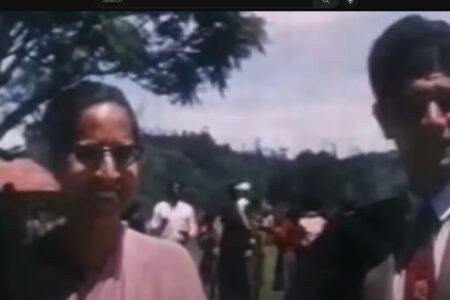 Mac at the commencement of his career seen here with Mrs Bhalla, Headmistress of Girls School c. 1956
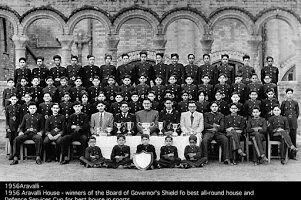
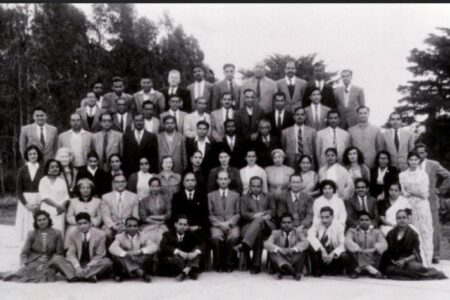
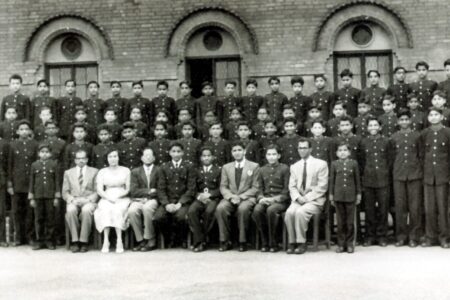
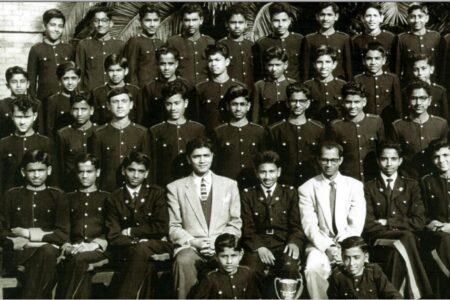
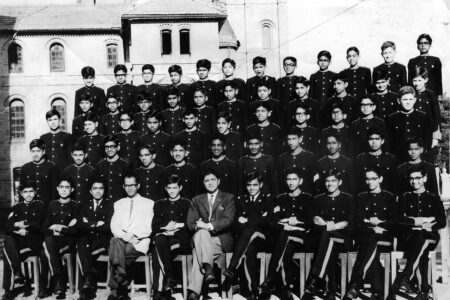
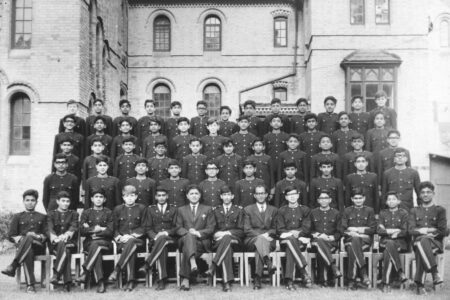
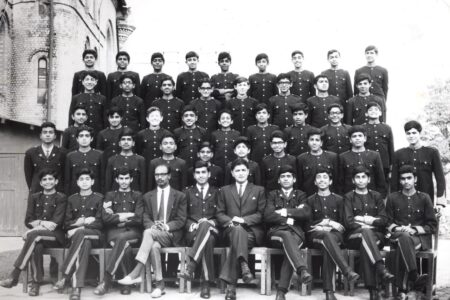
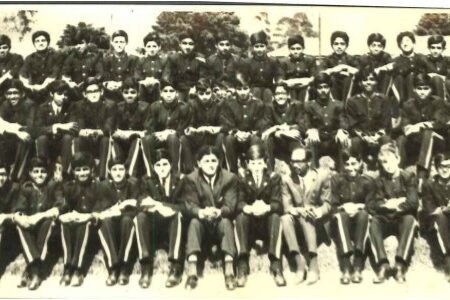
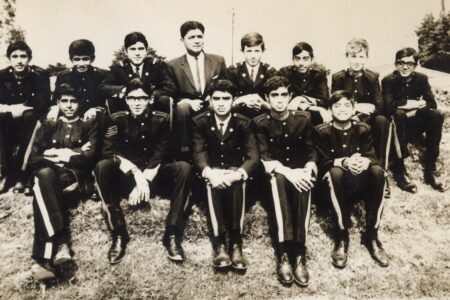
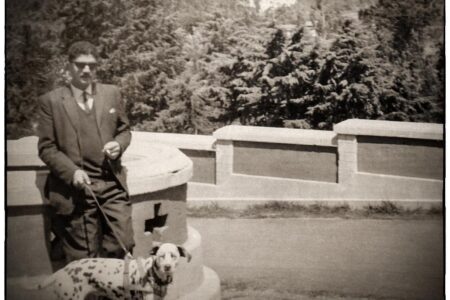
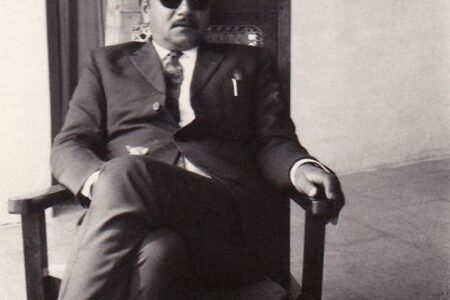
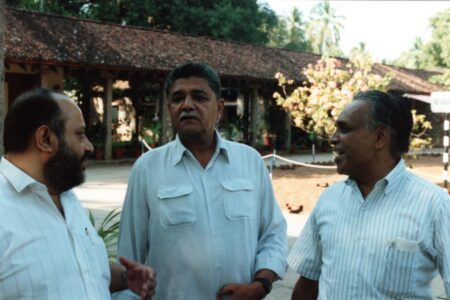
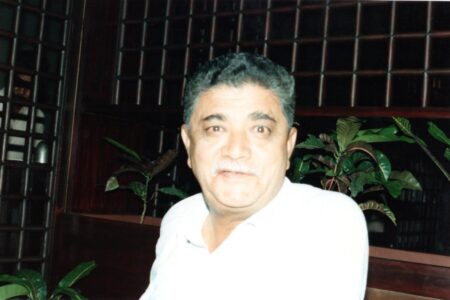
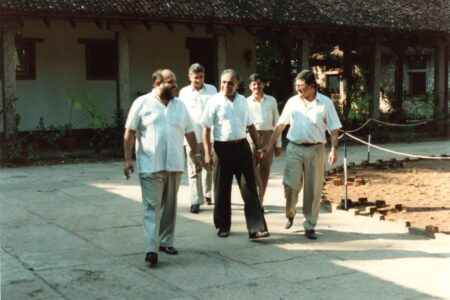
Mac – The Stalwart Who Never Was – Part 2a – The Bogus Mr Chips and ‘mystique’.
Many pupils who came into any sort of contact with Mac will be shocked by what they read as, for some inexplicable reason they developed a love for him, possibly because of the two subjects, English Language and English Literature he taught but more likely, as anything that went wrong, any shortcoming on Mac’s part, was not his but their fault. An analogy can be made with domestic abuse where the victims invariably blame themselves. Young minds are bound to develop a respect, if not love, for the person nominally in charge of them. From 1960, those in Mac’s charge ranged in age from 10 to 16 with a few exceptions at either end. My brother, for instance, was in Mac’s Nilgiri House in 1960, aged 10 (see photo in slide show). As such, a mature approach to analysing Mac’s performance by such boys on a contemporaneous basis would have been impossible. A post-mortem can only take place when maturity is reached but by then, in view of the passage of time, there is a reluctance to analyse something that cannot be undone. People tend to forget that which was unpleasant and remember only the good things. I have, with the benefit of many years experience in the ‘real’ world which has encompassed professional qualifications, management courses, actually managing dozens of people and thousands of customers, dealing with disciplinary matters, dealing with Unions, as well as being a school governor in the UK, analysed Mac’s performance as it affected my life. He was my Housemaster and it was during his stewardship of my House that I spent four of the most miserable years of my life. He died on the 23rd of June 1991, 23 years after I last had contact with him in December 1968.
Outside of Mac’s teaching duties there were shortcomings in profusion. He was the only staff member who was away from school premises for most of the day, 7 days a week, abrogating his responsibilities and delegating his ‘housemaster’ duties to 16 year old thugs. Just a small taster was the terrible practice, one he could and should have stopped, of making youngsters stand in a circle and slap each other at the back of the head, called ‘passing round raps’, repeatedly until the prefect or house captain administering such a ‘punishment’ tired of watching. God help any youngster who didn’t slap hard enough, for that youngster was subject to physical assault by the boy administering the punishment. I have some knowledge of the law and this type of punishment would undoubtedly be regarded as criminal. But, by acquiescing, through his physical absence, Mac was effectively permitting such torture. Certainly, in a British Court, Mac’s absence would be regarded as ‘gross negligence’ which is a criminal offence carrying a jail sentence or a fine or both. In addition, the victim would be entitled to claim damages. It should be painfully obvious to any sensible adult that such torture administered to anybody, let alone children yet to reach physical maturity could cause brain damage as well as mental trauma. Mac couldn’t care less! To him, both, the victims of such torture as well as the perpetrators were unwashed Indians. There were, over the years a few Anglo-Indians but they were the perpetrators rather than victims of torture.
It is germane to set out my own background or more accurately, my father’s background at this stage to demonstrate just how underhanded Mac’s negligence was and how he got away with it because nobody told on him, or to use Lawrence School, Lovedale parlance, nobody tattled. When Mac first became Housemaster in 1959, his pupils ranged in age from 10 to 16. Imagine the courage a 10 to 16 year old would have required to approach the Principal, K.I. Thomas, to say that Mac was hardly present in school outside class hours and in his absence, the senior boys, aged 16 were subjecting him, the complainant to torture! To start with, the young boy wouldn’t even know he was ENTITLED to complain. Imagine the ‘ganging up’ against him that would have occurred. He would have been regarded as a pariah! The word pariah means ‘outcast’ and is appropriate here as it is a word of Tamil origin and the school happens to be in Tamil Nadu (Madras) State. It was thus vital for Mac to be present all the time as unsupervised 16/17 year olds can do untold harm to 10 year olds!
My father was a restaurateur in Nairobi, Kenya and had other businesses including dealerships in playing cards and cigarettes. He was also a landlord, renting property that he owned. The two dealerships will be relevant when readers go further down my various commentaries relating to Mac. My father was a courageous, physically powerful man and much feared by the local ‘toughs’. Any trouble makers in his restaurant always came out second best and once they had received his ‘treatment’ never returned. His was the only business that stayed open into the late hours during the Mau Mau crisis in Kenya in the early 50s and was an oasis for British soldiers who needed refreshments and cigarettes. From 1942 up to 1962 my father carried a licenced gun. He was also a member of the ‘Special Police’, an organisation started by the British to replace the regular police who were called to fight in WW2. In 1962, he actually handed the gun to the Indian High Commission in response to the India-China war. Not that the gun would have made a difference even in a small way but it was a demonstration of my father’s love for India. The gun was probably stolen by an official in the High Commission but that is a whole new story. Until the day he departed Kenya a few years later, my father always carried a weapon (cudgel) for self-defence. For many years an incident that was the talk of the town went like this: three local Muslim ‘heavies’ entered his restaurant and started misbehaving. They were asked once to leave and refused. There was no second ask; all three had to be carried out and dumped unceremoniously on the street with blood pouring from their faces. In addition to his business, my father was also leader of the group of doormen (bouncers) that stood guard outside venues where Hindu women and children celebrated Indian festivals such as ‘Navratri’. Previously, Muslim troublemakers always entered and caused havoc. Once my father took over, the troublemakers were nowhere to be seen, my father’s reputation having preceded his physical presence. With this background in mind, had my father known of the torture being administered or had he witnessed it, the boy administering it would without doubt have had his neck broken as would have the father of the boy and as would have Mac. My father didn’t spend a fortune on airfares and school fees sending his children to an expensive boarding school only to have an effeminate Railway Colony man Mac delegate his duties to 16 year old thugs!
Below is a photo of my parents and I bidding farewell to my brother who was on his way to Lovedale. Little did my father know that in due course both his boys would fall into the care of Lovedale’s biggest coward, Railway Colony bum Mac!
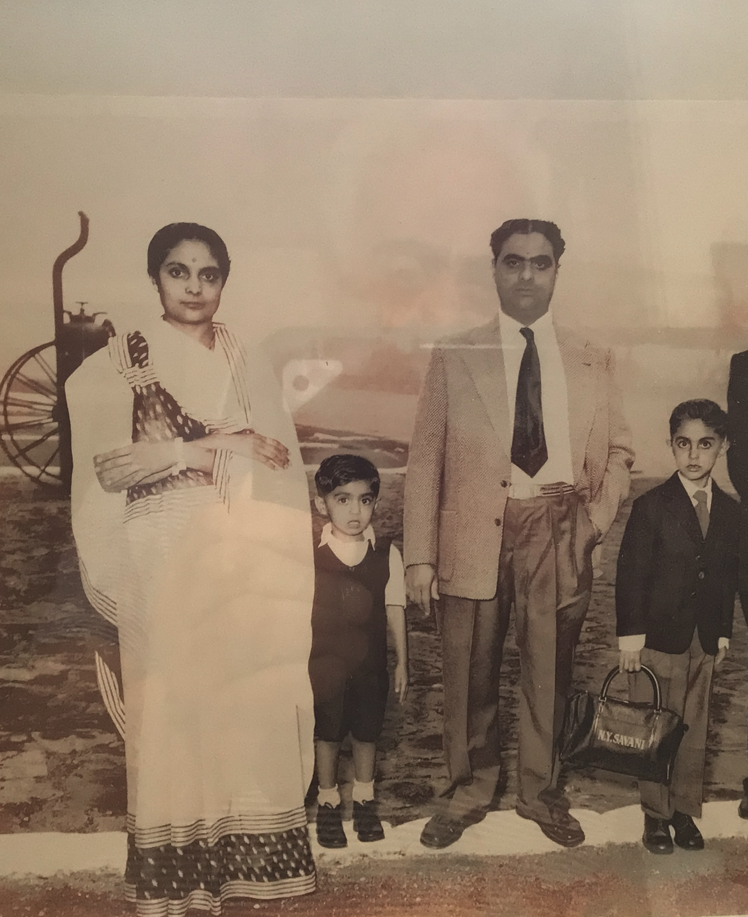
Please see my Page’ About Me‘ and within that : ‘My Lohana Heritage V Railway Colony Heritage.’ My father was a Lohana as am I. However, although I was born into a martial tradition, my enrolment at a school devoid of courage or fighting spirit, at the age of six stripped me of the ability to stand up for myself. There, I was no one—just another face in a crowd of nobodies, powerless against injustice.
Back though to Mac. His surname was McMahon and he had the initials W.J. I and others, including former teacher colleagues of his only got to know on the 28 October 2021, 30 years after his death, and that too after I initiated enquiries, that W J stood for Wilfred Joseph. Notwithstanding many queries even while he was in Lovedale, he simply refused to answer what his initials stood for. Mac was a term of affection. He was effeminate but to others he was handsome and looked like the great English actor Rex Harrison. He could put on an actor’s voice when teaching English Literature. He could have been described as smartly dressed. He was a ‘good’ English Language and English Literature teacher but I would add caveats to being a ‘good’ teacher:
To begin with, teaching English to school standard in an English speaking boarding school in India wouldn’t be complicated at all! After all, the only way the boys from disparate language backgrounds spoke to each other as well as to academic and support staff was in English. By disparate language backgrounds I mean Badaga, Bengali, Bhojpuri, Coorgi, French, Gujarati, Hindi, Kannada, Kashmiri, Konkani, Kutchi, Malayalam, Manipuri, Marathi, Marwari, Maithili, Nepali, Oriya, Punjabi, Sindhi, Sinhalese, Tamil, Telugu, Tulu, and Urdu. The languages I have set out, 25 of them, were the ‘mother tongues’ of just the boys and staff I actually interacted with! Far more skill was required in teaching say Hindi to boys of a non-Hindi background. Such a skill was evident in Mr. Nambiar, a Malayalam speaker (who was the father of my classmate Usha). He taught me Hindi as he did all my class. In any case, the foundation of English had been laid down by other teachers such as Mrs Enos in Prep School albeit she was a nasty, cruel unqualified teacher who was a remnant of the 1948 to the 80s era, Mrs Prince and Mrs Ray who taught in Junior School followed by Miss Hensman and Mr E John who taught at a level just before Mac took over. In other words, the heavy lifting had already been done! One more fact may be pertinent and that is even those who failed in other subjects and failed overall, never failed in English. It was, by far the easiest subject to get through!
Mac’s life between his birth on 28 February 1925 and the time he joined Lawrence School Lovedale, aged 31 in March 1956 are set out in my Page Mac -Wilfred Joseph McMahon – Origin and Early Years. It is important that that Page is thoroughly understood to ensure readers grasp just how egregious Mac’s appointment as a member of staff of Lawrence School Lovedale was. He should never have been able to come near, let alone join the staff of Lawrence School, Lovedale.
When Independence was granted, Mac was 22 and was in Mhow. Throughout the struggle for Independence, the community to which Mac belonged, the Anglo-Indian community regarded themselves as British. I personally have a great deal of respect for that part of the Anglo-Indian community that blended in with the other Indian communities. Emphatically, Mac did not blend in. Had he done so, he would at least have known a few words of an Indian Language. At one time, in the 1930s there was going to be an area set aside for the Anglo-Indians so that they would acquire the same status as any other Indian community such as the Gujaratis. Indeed the ‘Capital’ of that area was created and whilst the idea of a separate area fizzled out, the putative ‘Capital’, McCluskieganj still exists bearing the description: ‘McCluskieganj is a small hilly town in Jharkhand State, India, about 40 miles northwest of the capital, Ranchi. The town used to have a significant Anglo-Indian community at one time but this has declined considerably.’ Astonishing though it sounds, until 25 January 2020, two seats in the Indian Parliament were reserved for the Anglo-Indian community.
Mac the ‘Anglo-Indian’ was the nearest we were to get to an authentic Englishman teaching us which was regarded as highly desirable. He made himself popular by among other things, frequently holding his Literature classes outdoors in the warm sun and blue skies of the Nilgiri Hills. Imagine a young boy hearing Mac directing a student to recite Mark Anthony’s ‘Friends Romans Countrymen’ speech from Julius Caesar or imagine youngsters reading parts from the play ‘The Winslow Boy’ by Terrence Rattigan. An air of romance was created! Such was the admiration for Mac that any wrong he did was ignored as it was impossible to imagine such a figure straying off the ‘straight and narrow’. I must point out that Mac’s teaching may have been regarded as the epitome of the study of English Literature but that was by the standards that were just evolving in Independent India. He would have been regarded as ordinary, mundane even, in any reasonable school in the West. Please see Part 11 of this page in which I have attached various clips that show what professional actors were able to demonstrate relating to the subject matter that Mac was regarded as a master of. In particular watch a clip from the movie ‘Dead Poets Society’ to see what ‘inspirational’ would really look like and Mac wasn’t even within a million miles of the kind of inspiration demonstrated! See also clips of Marlon Brando in Julius Caesar and watch Kenneth Branagh in Henry the Fifth. In the clip of ‘The Winslow Boy’, one can see how the parts of the lawyer and the boy were acted to the highest standards. Whereas I have stated that Mac wasn’t within a million miles of being inspirational, as far as ‘The Winslow Boy’ is concerned, Mac’s teaching abilities were a billion miles from the standard demonstrated in the clip. This was the play put on at Founders celebrations in my last year, after which Mac had his head in the clouds as if he had achieved the impossible!
It is worth mentioning that as an actor, Mac was rubbish! Here is an extract from The Lawrencian Magazine of 1956 describing the Staff Play, ‘As Long As They’re Happy’ preceded by a British poster of the play which had premiered 3 years earlier in London.
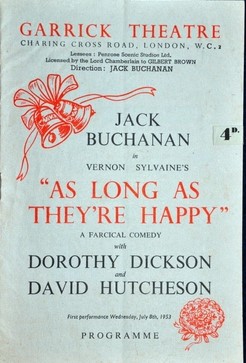
‘A very entertaining play was staged by the Staff of the School on Founder’s eve. The name of the play was “As long as they are Happy”. It was a comedy about an English couple whose eldest daughter had married a French author, the second a cowboy and the third was just coming of age. The trouble was that the first two needed money, while the third though still in her “teens” was already in love with a ‘crying crooner’. The solution involved many other characters. One was Dr. Schneider, a Psychologist by profession. His need comes when the youngest daughter jumps out of the bathroom window. The acting honours go to Anjolie Dev who acted as the “teenager”, Mr. Johnson as her father, Mr. McMahon as the crying crooner and Mr. Asrani as the Psychologist. The singing of the Crooner was very poor and so was the makeup. A general criticism was that there was too much powder on many of the actors. The press Reporter Michael’s laugh was far from natural. But the play, though very long, kept us absorbed throughout. The standard of Staff plays seems to be deteriorating. It may be for two reasons either the choice of the play or the standard of acting.‘
Notwithstanding his inability to create a favourable impression with his own acting, Mac’s reputation was enhanced as he it was who laid on plays (drama) annually during ‘Founder’s’ celebrations. The very characters who but for their presence in Lovedale would have been referred to as ‘country fellows’ got parts as heroes or heroines. Thus a vile, devious, bully boy who was in reality a dark skinned Syrian Christian villager called John Koshy became a matinee idol having played the part of Charlie’s Aunt in the play of the same name by Brandon Thomas. In the play, Charlie’s Aunt was a character called Lord Fancoat Babberley. Imagine the ecstasy John Koshy playing the part of a white English Lord would have experienced! As it happens, a few years later when it was no longer fashionable to use Christian names, John Koshy who was popularly known as Johnny, became Ashok Koshy.
As set out, Mac was regarded as a good teacher of the subjects mentioned (and no others). He had a Master of Arts degree in English from Agra University. As far as his University education is concerned, Agra had a large Anglo-Indian community (see my Page: Anglo-Indians Documentaries and Research Papers). So teaching English and English Literature including Shakespeare and Bernard Shaw to school standard would have been a doddle. His results were excellent but, and here it becomes interesting, and evidences just how bogus the mindset was, so were the results of a teacher called E. John (see separate Page: E John) who taught the same subjects but was a Malayalee and didn’t want to hide that fact! So too were the results produced by Mac’s predecessor, a lady called Mrs. Ramakrishna Rao.
Notwithstanding the subjects Mac taught, whether he was a good or an indifferent teacher or anything else, one thing was certain and that was his disdainful attitude to those in his care. At all times he exhibited an air of superiority and thus didn’t feel it necessary to be aware of any language other than English. It is pertinent to note that Sir Henry Lawrence, ‘working eight or ten hours a day .. passed his language examinations in Urdu, Hindi and Persian,’ ( Page 65 Lawrence of Lucknow 1806-1857 by J.L. Morison). Even Queen Victoria made an effort to learn Urdu and had a ‘Munshi’ teach her! Lady Honoria Lawrence’s journals are full of Hindustani phrases. Lady Honoria was Sir Henry’ Lawrence’s wife and a vile racist (see separate Page: ‘Lady Honoria Lawrence’). Their children, who played with their Indian servants were, in their young age more attuned to Hindustani than to English! Ironically, Mac should not have exhibited his air of superiority for he was part of the ‘Railway caste’, a derogatory term applied to his ilk who were ghettoised in Railway colonies performing relatively low skill jobs in the railways such as telegraphy.
Teaching the two subjects for which he was hired is what Mac should have been confined to and that is where matters should have rested. Teaching wasn’t what Mac was confined to and matters didn’t rest there! Disastrously, Mac was appointed Housemaster in 1960.
Mac – The Stalwart Who Never Was – Part 2 B – Goodbye Mr. Chips – Watch
Mac, who was meant to be a Housemaster was often compared to Mr. Chips, a character similar to Mr Chips from the famous novel ‘Goodbye Mr Chips’ by James Hilton. That comparison can be busted straightaway as the fictional Mr Chips served his school for 48 years, and was the longest serving member of staff. Mac served barely 19 years. Mr Chips was offered but declined headship, Mac yearned for but was simply not good enough for headship. Mr Chips stayed with his pupils all the time, 7 days a week unless he had somebody take temporary charge in his absence and supervise the House of which he was Housemaster. Mac was away most of the day from Monday to Friday and all day at weekends leaving his pupils in the care of child thugs aged 16. Mr Chips in his younger days participated in cricket with his pupils. Sports was anathema to Mac. Mr Chips went hill-walking, Mac could barely climb the stairs. Mr Chips wouldn’t dream of spending even a second in a club where people gambled, Mac spent every moment he could get away with at such a joint. Above all, Mr Chips cared abut his pupils, Mac cared about himself’.
By gambling at the Lawley Institute 7 days a week and chain smoking in front of pupils, Mac was butchering the concept of ‘role-model’!
Mac – The Stalwart Who Never Was – Part 3- Railway Colony meets Lawley Institute.
It was I who discovered that Mac was Mestizo/Eurasian mix; his father Vernon was a telegraphist, his mother Margaret Delphine was the daughter of a Mestizo John Braganza, and his mother’s sister Annie married a telegraphist, Victor Egidius D’Souza who was also a Mestizo. Mac did have a girlfriend, Audrey Guerra, a Mestizo, but she dumped him and married Ken Kannan, an army man. Audrey, like her mother was a piano teacher and belonged to the ‘Guerra and Sons’ family which owned a photography studio in Mhow.
If Mac had an iota of honesty about him, he would have declined the position of housemaster and continued in just his teaching position. However, honesty isn’t a trait that was anywhere within his ambit! He wanted the money that being a Housemaster offered, took up the position, but had no intention whatsoever of accepting the responsibility.
The responsibility incorporated in the adage ‘In Loco Parentis’ (meaning ‘in place of parent’ and used to describe the role of teachers) was alien to him. In those days, there was no TV, but there was radio on which among other broadcasters, BBC was available. Mac though, did not own a radio which he could have afforded. There were also newspapers and magazines available. Mac wasn’t interested. So how would a bachelor while away his time? Ideally, he would have participated in the activities of his wards if only as a supervisor. But that was not for Mac. Mac was determined to enjoy himself. The Anglo-Indians from the Railway Colonies of which Mac was very much a part, had such pastimes and pleasures as dances and Whist Drives. Further, during his teenage and university years Mac enjoyed a pseudo British lifestyle albeit still confined to his Railway colony. This would have involved such social pastimes as tea dances and listening to the latest songs from the West. I say this as Mac had no knowledge whatsoever of Indian culture or traditions. In one class I recall Mac talked about ‘U and non-U.’ I can do no better than append a summary of what ‘U and non-U’ was about: U and non-U English usage, with “U” standing for upper class, and “non-U” representing the aspiring middle classes, was part of the terminology of popular discourse of social dialects in Britain in the 1950s. Mac, of course regarded himself as being upper-class or certainly above us unwashed Indians!
Mac should have blended into the activities that other masters took to. Mr. Iyengar, as well as being a Housemaster also underwent training and became a voluntary ‘Army’ instructor within the NCC. Similarly, Hariharan underwent the same training and became a voluntary ‘Airforce’ instructor in the NCC. Nambiar the third Housemaster ran the cartoon society and was a brilliant cartoonist. He also participated extensively in the activities of the ‘Dakshin Bharat Hindi Prachar Sabha’, an institution teaching Hindi in South India. Jacob the Physics teacher ran the Camera Club for Photography enthusiasts. Housemaster C. Mukherji was keen on sports and oversaw preparations for sports events, particularly those involving inter-school sports. C. Mukerji’s brother M. Mukerji was an accomplished athlete and swimming coach who had trained in the USA. Mac on the other hand didn’t trouble himself with what he obviously regarded as activities beneath his imaginary station in life. He was physically unfit, smoked like a chimney, in the dormitory, between classes sitting with children or wherever and abhorred physical exertion. A pity as the school was located in 750 acres of stunning countryside and Mac could, if he wanted, have gone on daily walks over hills and dales and taken in the sheer beauty of the place he was lucky to have found a job in! There were so many stunningly beautiful places in and around Ooty that Mac could have visited; among them Glamorgan, Sims Park, Mudhumalai Game Reserve, there were any number of Tea Estates many owned by the families of his students. Wouldn’t it have been nice if he took some boys of his House as a reward for some good deed or even pupils from his classes to such places as a reward for good results? But no, why should he reward the children of ‘country fellows’? He was way above that!
Thus on most weekdays come 1.30 p.m. which is when lunch finished, Mac was off to Ooty, some 3 miles away to while away his time and return at around midnight. At weekends, he was off even before lunch! There wasn’t much ‘action’ in Ooty so our ‘Housemaster’ invariably parked himself at the Lawley Institute, a club built at the peak of British Empire. The irony here is that although the club was named after Sir Arthur Lawley, Governor of Madras, it was founded for Indians (most likely Anglo-Indians) who were excluded from British institutions.
Another club, far more prestigious and famous left by the British was the Ooty Club (where the game of Snooker was invented) but that was a members only club and the subscription would have eaten all of Mac’s salary plus some! In any case, arriving at that club by bus or scooter would have ensured that ‘poor school teacher’ Mestizo Mac was blackballed. More of his mode of transport later. So Lawley it was for him.
At Lawley, Mac gambled. There wasn’t much else to do at the club! Not that he had much money but what little he had kept him going. It is astonishing that everybody knew about this aspect of Mac’s life but nobody said a word. Had it been an Indian teacher indulging in this activity, he would have been given the bum’s rush out of Lovedale, for what sort of example was such a teacher setting his pupils? Was he being a role model? Wasn’t a teacher from the ‘prestigious’ Lawrence School bringing the school into disrepute by hanging out, daily, at the Lawley Institute? However, Mac got away with it; perhaps the fact that India had only just relieved itself off the yolk of slavery and the perception that Mac, the ‘almost’ Englishman was part of the ruling elite, played a part in the silence. Had it been known that Mac was in reality of poor Mestizo origin from a Railway Colony, he may never have got away with his unacceptable behaviour. No one begrudged him the pleasure he may have had or even considered the act of gambling wrong and certainly nobody would have considered it financial irresponsibility on his part if he lost a little here and there. The stakes were tiny. However, even the tiny sums spent over prolonged periods had a cumulative effect and that was to prove disastrous to Mac as will be demonstrated in other paragraphs. It became painfully obvious that he wasn’t saving any of the money he had earned. In summary, one could say that he may have fantasised about being a playboy but reality was that he was a simple high school teacher with a salary that was commensurate with his skill set and that wasn’t anything to write home about!
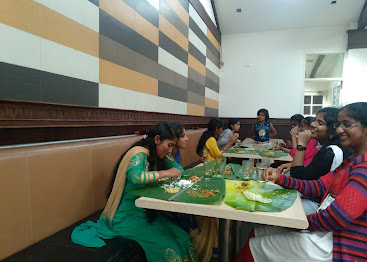
The photos below are of Jitu at the Lawley Institute on 2 October 2024. The second photo is of the room where Mac was gambling 7 days a week while those of us in his care were being tortured and robbed. He was a patron for 19 years and visited daily in his immaculate suit! Towards the end of his life, he didn’t have enough money to buy a cup of tea let alone pay for membership!
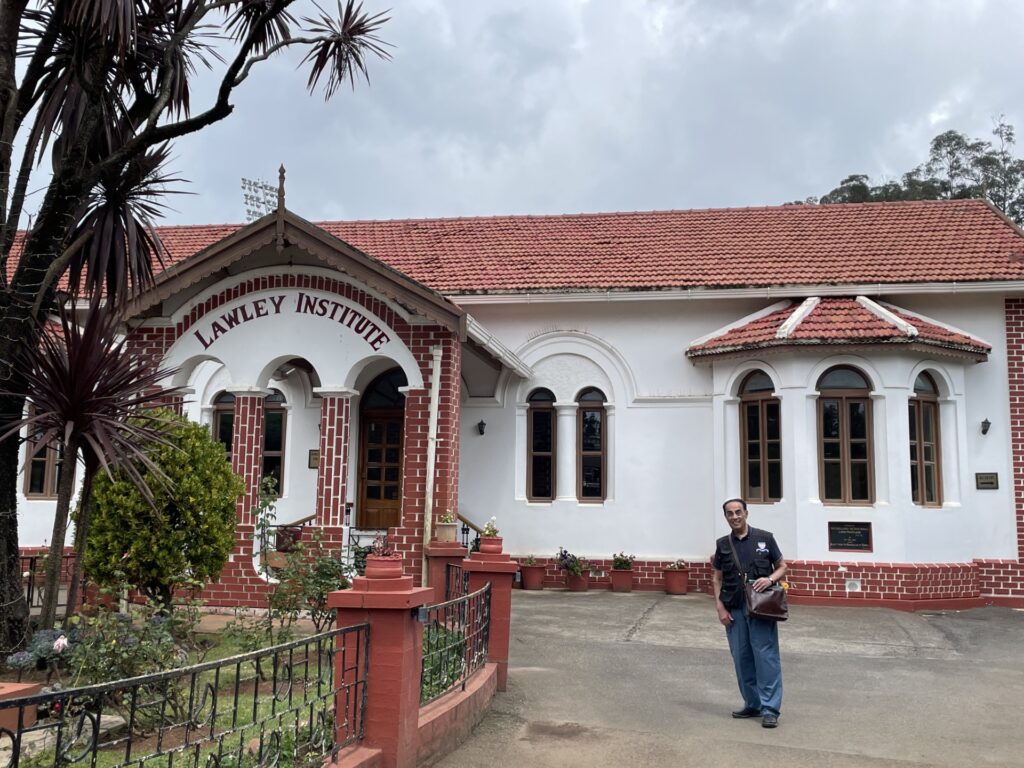
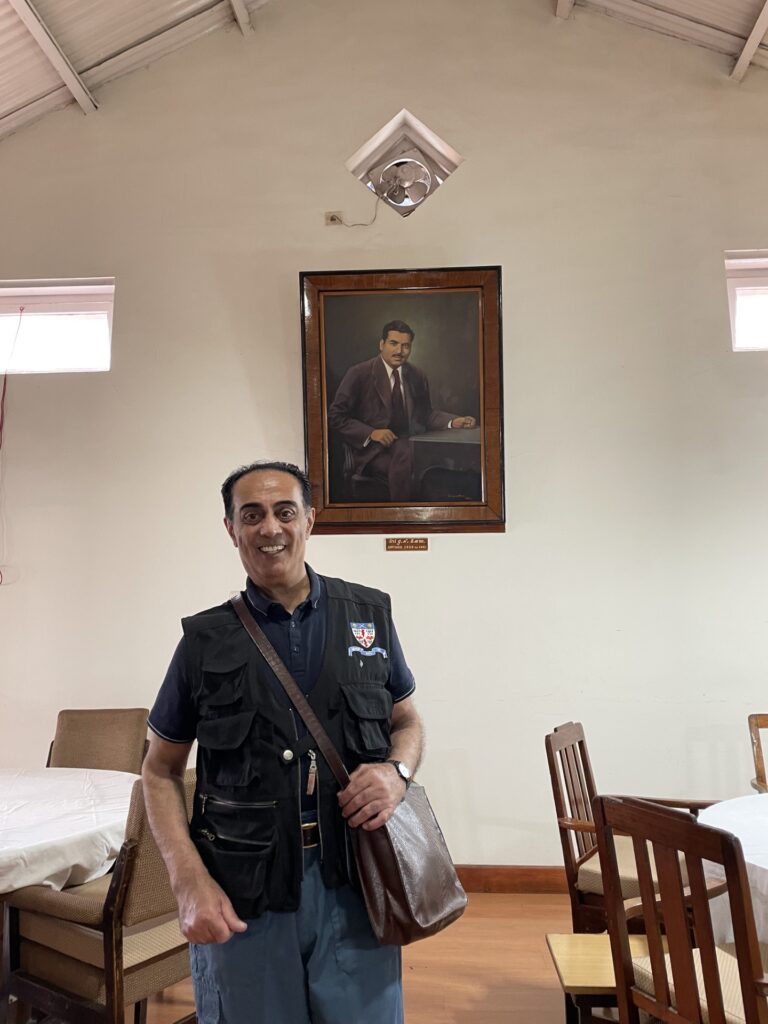
Mac’s earnings were meagre, a few hundred rupees per month and quite rightly so; he was a school teacher, not some scientist or doctor! These earnings had to cater for his smoking (he was a chain smoker), his clothes, the expense of keeping two dogs (totally inadvisable considering the accommodation he had), a couple of ‘Love Birds’, yet another unnecessary albeit small expense, he had a 50cc Java Jet Motorbike that played an important part in his life as well as the lives of his wards (negatively, I might add and as will be demonstrated later) and the need to pay for food plus the said gambling. Everything he earned was eaten away! The food in particular was a completely unnecessary expense. He had lunch which was immediately after classes but he was rarely present for dinner and certainly was unable to get ready in time for breakfast, even though he had a morning ‘inspection’ of the House just before breakfast, dressed in his nightgown. By the time he got ready, breakfast was over! Perhaps he didn’t like the ‘South Indian’ food served as he had probably been brought up on Anglo-Indian fare such as bacon and eggs in the morning and ‘ball curry’, which was just curried meat balls, an Anglo-Indian favourite, and rice as his main meal. In any case, he wouldn’t have fared much better at The Lawley Institute as the food served there was also South Indian and not Anglo-Indian! He would have struggled to pay for his travel to God knows where when the school was shut and for somebody to look after the two dogs and ‘Love Birds’ Mac had kept. Just why he kept the dogs and birds is anybody’s guess, it may have been because that made him appear an English gentleman. Mac had a simple solution; he stayed at the school for most of the holidays as although it was closed for the pupils, there were many support staff who had to be present, including those looking after premises, the accounts, correspondence with parents, Government authorities etc. Besides, the Lawley Institute always remained open. Mac never escorted boys to such cities as Bombay (Mumbai) but he did escort them back. This would have suited Mac as the trip would be paid for by the school!
In the month of May, described as ‘season’ using colonial terms still prevalent, there was a race-course and horse racing was very much part of the ‘season’. The cream of Tamilian Society made it a point to be part of the scene and betting was what racing was about. Mac would have been in 7th heaven albeit with far smaller sums being expended than those of ‘season’ visitors.
It was obvious that Mac was living way beyond his means and now, with nearly 5 decades of experience as a Bank Manager behind me, I can say, I was bang on target in my assessment made when I had yet to reach adulthood! A humble little school master, the son of a low paid, low skill telegraphist from a Railway Colony, with no inherited wealth, with no wealthy spouse or in-laws and no known family, let alone wealthy family was in no position to lead the sort of lifestyle Mac was leading!
The point of setting this scenario is to show that the time he was spending away from his wards was criminal. No other master, let alone Housemaster spent so much time away from the school. A Boarding School by its very nature required students and key staff, particularly those looking after the welfare of students outside the classroom, to board!
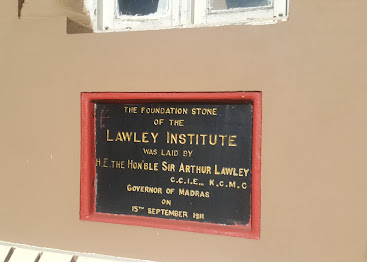
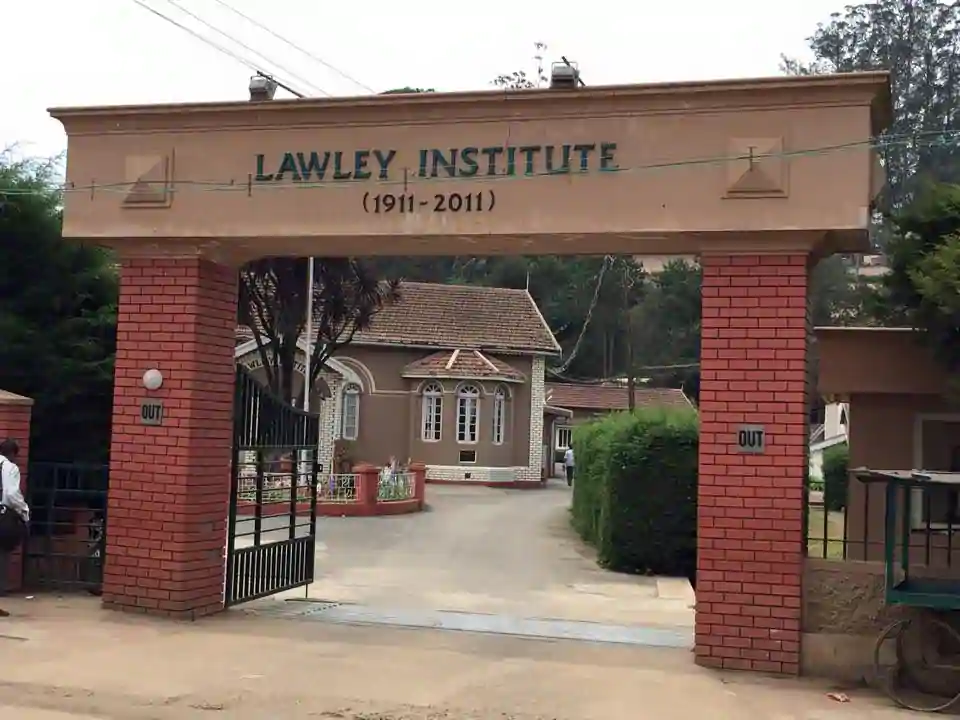
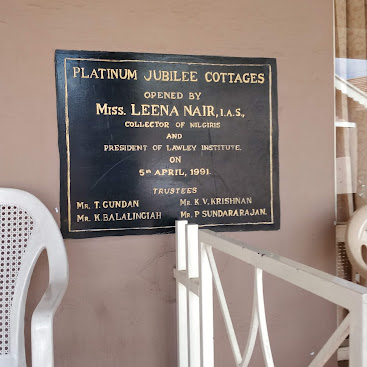
See below photos of the Lawley Institute from foundation stone to present day. Mac would be turning in his pauper’s grave seeing how much Indian it has become!
Mac – The Stalwart Who Never Was – Part 4 The Absentee Housemaster-while the cat’s away the mice will play – and the ironic house motto ‘Where the mind is without fear’.
The time Mac spent away from the school was the time when torture was practiced and perfected; for Mac left junior boys in the custody and care of senior boys who could more accurately be described as thugs. It may be pertinent to note that the word thug is in now part of the English language but its origins are Indian as that is what violent criminals were described as in the 1800s. Remember: Mac spent time away from school every single day of the week.
At the beginning, Mac’s mode of transport to Ooty was either the train which was infrequent, or one of many buses that passed through Lovedale. This meant he was constrained in the time he spent away as there were not many night time buses returning to Lovedale and taxis such as they were, were very expensive for a man on his limited income. In any case, the buses were for the ‘hoi polloi’ and ‘almost Englishman’ Mac with his smart attire would have resented sitting next to lungi-clad bare-footed unshaven, smelly Indians! Scrounging a lift from a fellow clubgoer resulted in a certain amount of embarrassment particularly as none of the other ‘clubbers’ were from Lovedale. So his solution was to purchase a 50 cc scooter. Even here, other staff were ahead of him. Both, Tamil teacher Vydyanathan and Sumeru Housemaster Iyengar who taught Chemistry purchased 250 cc Motor bikes. Iyengar being a fellow housemaster would have earned exactly the same salary as Mac but unlike Mac had the responsibility of a young family. Both, the bursar and the Headmaster owned cars. Unlike Mac spending money on smoking, gambling, wearing expensive clothes and other unnecessary expenses, the other gentlemen mentioned spent their money on more worthwhile pursuits. As one would expect from a 50cc scooter, it made a huge racket and his climb up the hill leading to the upper school gave ample notice to any student up to no good, to take evasive measures. Thus, torture took place at will as the racket Mac’s scooter made, gave enough time to the torturers to cover up.
As mentioned, Mac’s absenteeism wasn’t on the odd day here and there. It was a 7 days a week affair. The subjects he taught were the easiest and hardly required any preparation . Any homework he had to correct and other minor duties were easily undertaken during and in-between periods. What wasn’t easy and what he should have devoted his time to was his duties as a housemaster. He, though, delegated this important task to the thugs.
When cat Mac was out, it wasn’t just ordinary mice that came out to play but psychopathic thugs who Mac could rely on. They were all of 16 years old! The children whose ‘parent’ Mac was meant to be were left to a horrific regime run by Senior Boys. 12, 13 and 14 year olds were literally tortured by 16 year olds for whom that was a matter not only of pleasure but also an exercise of authority. Alleged misdemeanours were dealt with by the deft use of fists and physical punishment. Youngsters feared the period when Mac wasn’t around.
The one ‘duty’ Mac carried out with enthusiasm was reading every letter to and from boys. This practice of censorship in the school enabled it to get away with numerous unacceptable practices. It meant that parents were unaware of the miseries visited upon their offspring.
Apart from Mac’s Nilgiri House, there were three other houses where the housemasters were always present. These housemasters were all married and had families of their own. The torture in those three was controlled.
It is impossible to believe that Mac wasn’t aware of what was happening but ignoring the matter did him no harm while ruin was caused to young lives as well as the lives of the families whose offspring had the misfortune to land in his care. Fortunes were spent sending children to that torture chamber that was Nilgiri House particularly for those travelling from abroad. Whereas parents spent 12 HOURS A DAY working towards the fees at Lovedale, Mac spent at most 10 HOURS A WEEK teaching (2 classes a day 5 days a week). In addition, a few hours grabbed between classes would have enabled him to complete such tasks as correcting homework. He was never, ever, overburdened with work! Just at a time when 14 and 15 year olds should have been trying to master the laws of Physics, Maths and Chemistry, an atmosphere of fear prevailed. Ironic, given that the motto of the House was ‘Where the Mind is Without Fear’!
Nevertheless, Mac was regarded as a hero even by those who were victims of negligence! After all, the English could do no wrong and Mac was regarded as being the closest to an Englishman that they would get. Getting close to an Englishman was the ultimate status symbol, even if it meant enduring torture.
Mac – The Stalwart Who Never Was – Part 5 A – The Torture
There were three locations where torture by physical assault took place. The first was what was termed the ‘Wash Lab’ which was a filthy urinal and washroom combined. Here, hapless boys were taken by the ‘enforcers’ (prefects, house captains, monitors etc) and administered severe beatings. More brazen was the area called the lounge which was really just a turning in the passageway leading to a staircase. I use the word brazen as the location was just outside Mac’s flat! A favourite time was Sunday night; if instead of being away in Ooty, Mac had been in his flat at that time, that torture would have been averted. There were no other teachers, let alone housemasters away at that time on a Sunday night leaving their wards in such danger. Further, Mac only returned at past the midnight hour as he would need to get ready for classes the next day. The third place the torture took place was at the side of the prefect’s corner bed. Naturally the prefect would be in his comfort zone and have his friends to both participate in and actually gloat over what was happening.
It may be appropriate to lay down aspects of the ill repute the bullies and torturers that Mac had minding business when he was away. Two of these boys acquired the sobriquet ‘bison’. One was a character called Venugopal in 1963 and the other was C. Rajan in 1965. The reason for the sobriquet was simple: both perfected the art of having younger boys bend over, then running as if to take a free kick in the game of Rugby, kicking the hapless youngster with such force that both his anus as well as his testicles were bashed up.
Here is a quote from George Orwell’s book , Burmese Days:
”I have had many masters in my life,” old Sammy said. “The worst was Colonel Wimpole sahib, who used to make his orderly hold me down over the table while he came running from behind and kicked me with very thick boots for serving banana fritters too frequently.
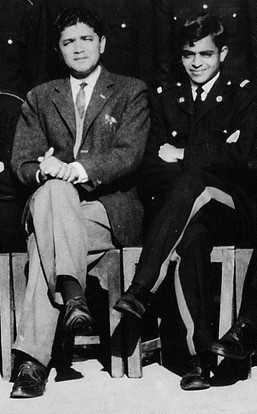
Below is C. Rajan in 1965 with Prefects Uniform sitting next to Mac. Last I heard, the nasty little fellow was reduced to a quivering wreck due to ill health. Like a lot of other ‘office bearers’ i.e., prefects, this character must have been bewildered that nobody in the real world could care less about the military style uniform he wore. His world must have come crashing down when he realised that outside the cocooned world of Lawrence School, he was an absolute and utter nobody!
I have heard today 12 May 2025 that this Rajan character has just died! Good! While I sympathise with his sister Padma who was my classmate, I cannot but be happy! Happy not only for myself but happy for my deceased parents who were unaware thAT under the aegis of Mac this little turd was torturing their child WHILE they were paying a fortune in airfares and fees for the ‘privilege’!
This is the sort of practice or more accurately torture that should have been done away with in 1947 when Indians started arriving! Reality was that Mac, by his constant absence, enabled such practices to be enhanced and perfected!
Examples of other dreadful bullies that thrived in Mac’s House were Anglo-Indian characters called Danny Roshier and David Boosey. I actually witnessed Danny (real name Brian Cedrick Roshier and like Mac of Railway Colony origin but in Lallaguda)) and his accomplices try and hang my brother from the rafters using a rope tied round his shoulders! It is a miracle that the rope wasn’t tied round his neck! An alert Mac, on duty as was required, would have been tipped off and that should have led to the expulsion of Danny. But, Danny knew that he would get away with it because Mac was hardly present at any time. As for David Boosey, his forte was to obtain his share of any goodies youngsters would have come into possession of. Boosey like Roshier were from a similar community, i.e., Anglo-Indian Railway Colony that Mac hailed from and thus the two were in their comfort zone as the school was just a remodelled version of the Railway Colony. With Railway Colony man Mac in charge, their confidence levels in ‘getting away with it’ must have been sky high! Had these characters behaved the way they did in ordinary Indian day schools, or even Lawrence School Sanawar, they would have been slaughtered, for why would ordinary everyday Indian Hindu parents tolerate their children being tortured by Anglo-Indians left behind by the departed British? As it happens, Roshier passed away in 2020 in the U.K. Danny’s son Dwayne has chosen to remain in India, has fully integrated even speaking fluent Telugu. Danny’s elder brother Henrich is a very good friend of mine to this day. Boosey emigrated to Australia.
Another torturer was a local boy from Ooty called Vishwanath who supervised ‘passing round raps’ as often as he could. Once again, there was no discernible quality that Vishwanath possessed except that he had failed one year and was obliged to repeat his class. Thus his size and strength would make him ideal as Mac’s enforcer! This character should have been controlled. As his photo shows this character was tiny but compared to children 4 years younger, he would be strong enough to inflict torture! I happened to have met his father in Ooty when on an outing. Said father was shabbily dressed, unable to speak a word of English and was happy riding a clapped out scooter!
In 1962, my father had sent my brother and I to England for the annual holiday. When we returned, naturally we did so with a lot of English tuck such as chocolates and sweets and some nice clothes. Every confectionary item was removed from my brother by the Tamilian gang (see in following paragraph) while Danny Roshier helped himself to clothes, pens etc. Even though I was in Junior School and much smaller in size than Danny Roshier, he got me to part with my ‘Made in England’ swimming trunks which he actually wore, even though many sizes too small, purely to show off that he had ‘Made in England’ swimming trunks!
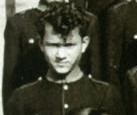
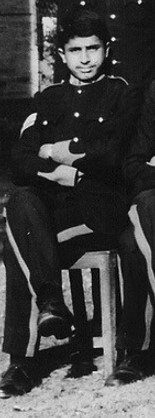
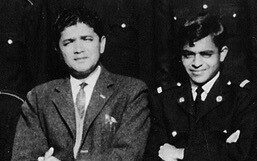
In the photos above Left to Right Danny Roshier, Vishwanath in House photo 1965, Rajan with Mac
The characters mentioned above would have found out too late that the feeling of ‘military’ power they got by the bogus military uniform, complete with bogus military rank signified by epaulettes and stripes that enabled them to impose ‘military style’ discipline, was valid only in the confined atmosphere of Lawrence School, Lovedale. I have already mentioned what happened to Rajan. Vishwanath the local Ooty boy disappeared into the ether as an absolute nobody.
Then there was the Tamilian Gang. This gang consisted of four characters; Venugopal (a.k.a Bison), Ravi, Subbiah and Sukumar. Venugopal it was who was the original ‘bison’. Ravi and Subbiah were just plain bullies whose forte was theft. Sukumar, a year or so younger was not involved in any sort of bullying and indeed was a talented sportsman. Venugopal kicked the bucket recently, probably natural causes. Ravi and Subbiah have probably just blended in with the local Tamil community, their ‘Elite English Education’ under Mac having had no impact. They may as well have gone to a local Tamil school such that both, they as well as their victims would have been better off!
Now read this extract from the musings of E John about whom there is a Page E John who joined as an English Teacher in late 1965 to understand how bullies were dealt with by a person OWNING the problem and contrast that with the cowardly Mac:
My choice of Sumeru House was not accidental. I was the Housemaster of Sumeru for a little over two years from 1969. I had earlier been Sumeru House Tutor for three years. I would like to believe that I gave of my best to the boys, even if I say so myself. There were times, however, when I had to be quite severe, against my better professional judgement, in dealing with bullies. When you are up against hardened bullies, you are frequently flummoxed while looking for a psychological approach to deal with them tactfully. On the other hand, like a red rag to a bull, the instinctive response of ‘retributive punishment’ presents itself to your impulsive nature. Truth to tell, I had succumbed to this kind of knee-jerk reaction on more than one occasion. One such occasion refuses to leave my memory.
One of my wards was found in possession of a camera that did not belong to him. Let him remain nameless. The compulsive bullies in my house who came to know of this act of ‘borrowing’, promptly pronounced him guilty in a kangaroo court of their making, and then without ‘due process’ proceeded to thrash him virtually to within an inch of his life, short of lynching him that is. The news reached me through a school prefect who did not want to be named. And there I was, my head and heart both warring. First, it raised my hackles that my authority as housemaster had been challenged. The perceived hurt to my ego rankled. But on reflection, my training as a teacher cautioned me against a knee-jerk reaction.
I was later told that a school prefect, who happened to be one of my wards, was also involved in it, and that proved to be more than I could condone. It would seem he had aided and abetted the perpetrators of this act of cowardice instead of restraining them. I summoned him to my office straightaway and without waiting to hear his version of the incident and throwing caution to the winds whacked him with my bare hands so hard that I could easily have been charged for causing grievous bodily harm had he decided to complain in a court of law. He did not. The rest of that gang also received the same treatment. Initially I had only wanted them to have a taste of their own medicine, but I lost my head when once I had started. I realized that I had gone too far only after I had regained my composure. What is that about hindsight being a perfect science?
Fortuitously, KIT was out of station and it was to Major Mehta his deputy that I had to report what had transpired. Happenstance favours the remorseful. And he weighed up the provocation and my reaction and decided that the boys had it coming to them. For an old soldier, with a martial mindset, retributive justice would strike as the most immediate sanction against wrong-doing. For a few days after that incident I was persona non grata to the prefects, whose collective pride in being members of a select band of school leaders had been seriously hurt. How was I to impress upon them that privileges did not give them the licence to act on impulse with impunity? That would have been like the pot calling the kettle black.
Mac- The Stalwart Who Never Was Part 5 B – The Enforcers – The Kerala Villagers and Balasingham EVIL EVIL EVIL
Jacob Kallivayalil (known as Kalli Jacob)
In Mac’s Nilgiri House, by far the nastiest piece of work was a character called Kalli Jacob, a sinister looking, pimple ridden bully; a Syrian Christian who was very liberal with his fists. Kalli was appointed Vice-Head boy of the school for his thuggery for there was no other discernible quality he had. This evil and cowardly character, always accompanied by two or three of his pals, subjected various juniors including me, and I weighed in at around 80 pounds compared to his 160 or more pounds, to daily beatings! He didn’t need any reason; he could and did get away with it. On one occasion, a couple of boys from class 10, a Sri Lankan Christian Ravindra Balasingham and John Koshy, yes the ‘actor’, a fellow Syrian Christian of Kalli Jacob, both boys a year below Kalli and one year above me were ‘tipping’ him off that I was ‘spying’ on him! Not only would I have not known what this ‘spying’ involved but Kalli himself was too stupid to guess that he was being fed bogus information just so that the two ‘tippers’, what in modern parlance would be called ‘snitchers’, would be in his good books! Another victim at the receiving end of Kalli’s fists was my good friend and classmate, a highly successful Company Director of many Multinational Companies in later life (who I will not name) who is still absent his two front teeth 6 decades after the event! The evil character Kalli was also a thief who broke into the trunks of younger boys and helped himself to any goodies he desired. After all when he was conducting his thefts and beatings, Mac had his derriere firmly planted on a chair at a gambling table in the Lawley Institute. At other times, Kalli would see somebody carrying something he liked and simply helped himself to it by physically removing it from the hapless victim’s pocket.
Essentially, Kalli Jacob and John Koshy were, like most others of their ilk, villagers who had probably never ventured to a town bigger than Kottayam or Ernakulam. Kalli was probably from a village called Mandakayam. Thus, extreme envy would have guided their behaviour but it was Mac’s duty, and he was paid for it, to keep matters under control. Mac neither had the inclination, nor the desire so to do. Mac trousered a housemaster’s salary and never delivered. Fundamentally, this was dishonest on the part of Mac. The two characters, Kalli and John Koshy are, to this day, the best of friends within the close knit Syrian Christian community.
Under normal circumstances, Mac’s enforcers were final year students. In the case of Kalli, though, an exception was made: in 1965, Kali Jacob was in the 10th standard but having detected early signs of thuggery in him, Mac decided to put him in charge of boys from classes 8 and 9. Unlike others from his year this character was given a bed in the junior dorm (class 8 and 9) where his taste for using his fists commenced. One only had to touch a desk he had requisitioned and his fists would start flying. This could have, should have and indeed the other housemasters would have put a stop to this even at the expense of expelling this vile character. Thus, he honed his skills in brutality. It was in the following year, 1966, this odious character was appointed Vice Head boy. Such an appointment involved taking an oath as follows:
‘I solemnly promise to maintain discipline, lead in the right way and uphold the good name of our school. I also promise to discharge my duties honestly and impartially.’
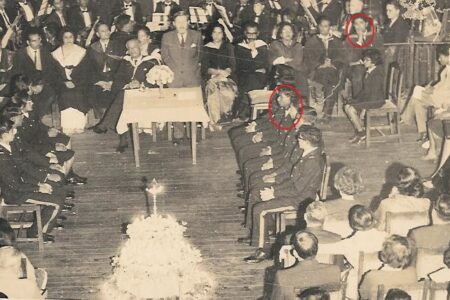
The photo below is of the actual Investiture Ceremony showing Kalli Jacob seated right, third from right within the red circle. Sitting at the back, also within a red circle is Mac looking anxious, and not surprising as he was keen to get away to Ooty which he did 7 days a week, leaving his wards in the care of his enforcers.
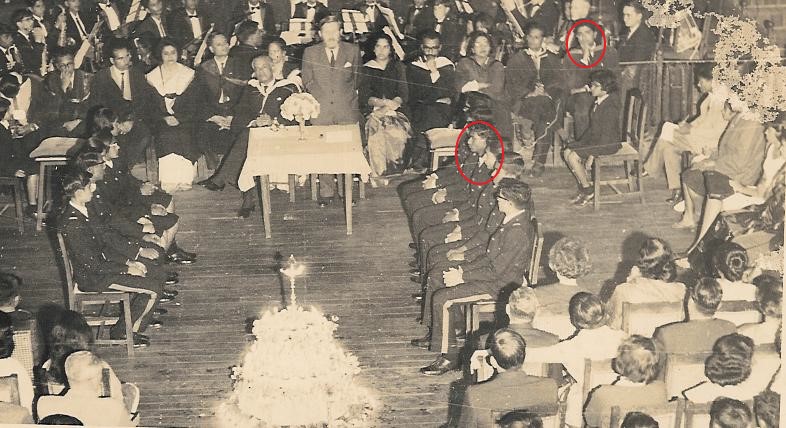
Discipline was indeed maintained but by use of fists, not ‘in the right way’, and what he was upholding was not the good name of the school but his ill-gotten ‘wealth’ or better described, proceeds of crime. As for discharging his duties honestly and impartially, this sadist’s vocabulary blocked those words.
In his final year, Kali had become the unrivalled virtuoso in the league of bullies! Anything he desired but was not his, he got. Theft was his speciality. I recall clearly in July 1966 a particular incident:
The boys were away in class at 6 p.m. doing prep. Mac was as usual at the Lawley Institute gambling and wouldn’t return l until midnight. Ample opportunity for this character and his select pals to break into every junior’s trunk and help themselves to whatever they desired, be it ‘tuck’, trinkets or any item of value. A particularly slimy pal was a character called Vinod Rao, known by his nick name Pilly (see photo). As it happens I knew Pilly’s elder brother Raghuvir and younger brother Ramesh, both kind decent boys. Vinod Rao on his own was nothing stronger than hot air but under the patronage of Kalli was able to carry out thefts at will. Pilly’s rural origins in Warangal, in present day Telangana did not give him the wherewithal to satisfy his cravings for ‘luxury’ items. There was absolutely nothing anybody could do as this kind of behaviour was as good as sanctioned by Mac’s very absence! Had Mac been present as he was paid to be, the mere shuffling of feet in the dorm at 6p.m would have come to his attention!
What this Kalli character didn’t find in the trunks he has broken into but nevertheless desired, he simply took as stated, from the pocket of anybody he saw possessing such an item. I recall, I had a very expensive Parker pen protruding from my pocket at the parade just before breakfast. Obviously this character was the boy in charge. We were stood at ‘attention’ before being commanded to turn left and march to our seats to commence breakfast. Brazenly, this character approached me, put his hand in my pocket and that was the last I saw of the pen. Mac was always fast asleep at such an hour, the previous night’s shenanigans having rendered him incapable of rising in time. Thus, ‘getting away it’ became the norm for this thug.
Kali was a villager from around Kottayam and Lovedale was where he came into contact with the luxuries city dwellers would have considered run of the mill normal items. The fool had even decided to project himself as a sophisticated Westerner. He turned up once from a short holiday with LPs (Long Playing Records) of Western songs. I still remember the records: Dave Clark 5 (including Catch Us If You Can), Herman’s Hermits (Something Tells Me) and Trini Lopez (Michael Row The Boat Ashore). The fellow even started playing the guitar and subsequently persuaded teacher E. John who was then relatively new and wouldn’t have known about Kalli’s bullying, to join his ‘pop’ group at an event called ‘Amateur Hour’ where they rendered ‘Something Tells Me ‘. It made for excruciating listening but nobody dare tell Kali that he was crap! Obviously a Malayali boy from a Malayali village singing a Herman’s Hermits number would sound exactly like a Malayali boy from a Malayalee village singing a Herman’s Hermits number!
There were many instances of this character trying to persuade others that he was from a sophisticated background, and that he had adopted a Western lifestyle with ease. I recall him turning up for dance practice, in preparation for the Founder’s dance wearing tight fitting shorts that exposed his considerable derriere, with a yellow polo-neck sweater and ‘Beetle boots’. One can imagine how ridiculous he looked, particularly as his face was pimple-ridden but nobody dare tell him! At other times he would lean against the window sill in ‘large hall’ while being in charge of Nilgiri house, wearing leather gloves stolen from a hapless boy. Again, he would look ridiculous but nobody dare tell him.
Why, he even decided to show his ability to acquire a girl friend. A Malayalee Syrian Christian girl wouldn’t meet his standards of ‘sophistication’ so he went for Sharmista Dasgupta, a rather pretty Bengali. He even claimed to have smooched her! If true, the trauma may well be haunting poor Sharmista 6 decades later!
Come the end of the year, relief was setting in and the happiest day of that year for the juniors was when the train departed Lovedale station leaving Kalli behind to do his ISC exams. Although we had parted company with him, many would have given their right hand to witness what happened during that short period when only the final year students remained.
Head boy Ajay Vir was playing snooker when Kali walked in and told Ajay that he, Kali wanted to play as Ajay had his share. One hard poke administered by Ajay to Kalli’s solar plexus led to Kalli’s abject surrender. For this fool had assumed that he was invincible and that not even the Head boy would dare say anything to him. How wrong he was and how ridiculous! What an inglorious end to his ‘tough guy’ image! He picked on someone his own size and was hammered!
That though, wasn’t the end of Kali’s connection with Lovedale! Having left school he joined St Stephens college in Delhi. Whether this was to pursue Sharmista or not, what did happen was he met fellow student Lahiri who was to become Headmaster of Lawrence School in 1991. He also dumped the lovely Sharmista or it could be she dumped him or it may even have been that there never was a relationship of any sort in the first place. He did, though, acquire a new girlfriend, the lovely, elegant Kini (Kiran Singh) who went on to give this character two beautiful and talented daughters. Kini was, of course North Indian for this character had decided that Syrian Christian girls were not good enough for him. Both, this character and Kini wanted to join the Police Service but that fizzled out. Cutting to the chase, the couple got married and Kini went to live down in Kerala as Mrs Kalli.
The two daughters were admitted to Lawrence School where the headmaster was the aforementioned Lahiri. Thus, the disgusting Kalli’s bullying carried on long after he left school. He simply took over the parent-teacher association and made it his personal fiefdom until his daughters completed school following which he had no desire to be involved. Whilst his daughters were in the school, his presence at the school was a constant, no doubt to ensure that said daughters were protected. It is unlikely that he remembered the time he took advantage of the absence of the parents of those he battered. His daughters, extraordinarily clever, pretty and successful are well settled in the USA.
Comment must be made here of the action of Dev Lahiri a Headmaster who made extraordinary efforts to combat bullying. Lahiri, despite his vehement opposition to bullying, became a good friend of Kalli—one of the greatest bullies of all. What a stark contrast to his stated principles! In this connection, see my Page Headmaster Lahiri and Parades and within that ‘Old School Tie’. Lahiri went out of his way to enable Kalli’s daughters obtain scholarships to study abroad.
The daughters are, of course, fully deserving of their success in life but I wonder if Kalli ever thought of the terror he wreaked upon the boys whose parents were thousands of miles away and blissfully unaware of what this evil character, with Mac’s connivance was up to?
 Kalli 1965
Please see Link below to Kali’s extraordinarily talented daughter
Last I heard, the two daughters who could be described as geniuses, Dr. Diya Kallivayalil is a psychiatrist at Harvard Medical School and Nitya Kallivayalil, an astrophysicist at the University of Virginia 15.
https://www.emalayalee.com/vartha/283482
I can do no better than end on, shall we say, an interesting note: Kalli Jacob left School at the end of 1966 with a reputation as one of Lovedale’s greatest bullies. In 1967, in his village, a school called, in those days, Corpus Christi, now known as Pallikoodam, was established by Mary Roy, mother of the notorious Arundhati Roy about whom I have written in my Page ‘Arundhati Roy and other Unsavoury Characters’. And the President of that School as of the date of this Page? Kalli Jacob of course! Who knows? A popular subject in that school may well be ‘How to get away with bullying ‘!
John Koshy
Evil is what best describes this character. Thieving, bullying, snitching, exhibiting bogus sophistication whilst emphatically a Kerala villager were just some of his attributes! He should have been booted out when he was still in prep school but perhaps because his widowed mother may have had influence with the Headmaster K.I. Thomas, a fellow Syrian Christian, this character survived! As recently as 2017, I met this character’s step brother who told me categorically that he does his best to hide his connection to the evil Jhonny!
Warning: Do not be misled by the image this character tries to convey in his new avatar of the flute playing Hindu Lord Krishna now calling himself Ashok Koshy. Until such time as he reads this page it is unlikely that he will know that ‘Koshy’ gives his deception away for that is the Syrian Christian name of the biblical character Joshua. Throughout the 12 years he was in school he was known as Jhonny who liked to pass himself off as an Elvis loving, sophisticated Westerner. He was the only one who believed in his own myth. The rest of us saw him as just another dark skinned Syrian Christian from Kerala. He can be described as a psychopath.
What Jhonny wanted Jhonny got. His methods were very simple. He would help himself to anything from the cupboards of the others and where any items he desired couldn’t be found, his fists came in handy. He would steal anything: a cardboard box, a pair of trousers, toiletries, even a magazine cut-out of Raquel Welch!
Desperate to project himself as the aforementioned Elvis loving Westerner, he even went to the extent of ‘borrowing’ a record player from a junior school boy Chaitan Popat and come 6 in the morning, yes, morning, when everybody else was anxious to brush teeth with the limited supply of water available, to use the loo etc, this character would put on an Elvis record with one song in particular, ‘Suspicion’ being constantly repeated.
He developed a romantic interest in a girl called Radhika Mehta. There was nothing in common between them but, Radhika was extremely fair skinned compared to dark skinned Jhonny. He needed to impress her and his way was to ‘borrow’ a maroon coloured polo-neck sweater from a friend of mine and wear this under his battle jacket. He looked more of a comic than a smartly turned our ‘military’ boy which was the idea of the military uniform we had to wear!
In 1967, this character should have been expelled for the hammering he dished out to a harmless boy called Velu Lingappa. So bad did it get that Velu ran away from school. I can still picture the scene of Velu returning accompanied by his grandfather, who was the Manager of the prestigious Ooty Racecourse, and father, both perfectly respectable gentlemen. However, neither the Headmaster, K.I. Thomas nor the cowardly Mac gave these gentlemen the time of day and not a word was said to the evil character Jhonny. Several years of fees paid by Velu’s father and grandfather were rendered valueless as the poor boy had to leave school. Obviously Mac wouldn’t have been able to appreciate just what was being presented. How could he? Mac’s grandfather Joseph had left the care of his son, Vernon in a Church funded orphanage, Vernon the 50 bucks a month telegraph operator had his own son Mac study free in a Church school, and Mac had his University education up to Masters level paid for by the Church. Alas, the Courts in India were not advanced enough for legal action to be initiated and regrettably that remains the position today. The last others heard of him, Velu was literally begging on the streets of Mysore. He may well be dead by now. This is what Mac’s abrogation of responsibility resulted in.
Bullies are essentially cowards and Jhonny was no exception. At a ‘formation’ one evening preparing to enter the dining hall at the command of the Head Boy Atom Talreja, Jhonny decided to see how far he could push Atom Talreja and started shouting at him ‘let’s go’ meaning let’s get into the dining hall. Talreja, as well as others clearly heard this and it became a matter whether Talreja’s authority would hold following this open defiance. Talreja asked Jhonny to repeat what he had said. There was pin-drop silence and Jhonny meekly repeated ‘let’s go’. The response from Talreja was ballistic! ‘Shut up or I’ll smash you’ yelled Talreja at a voice pitched to match a Parade Commander (which, incidentally Talreja had been earlier that year). Jhonny stopped just short of wetting himself and quivered. All that ‘tough guy’ image, exactly like that of his mentor Kalli Jacob collapsed exposing Jhonny as just another everyday coward!
Following his completion of school, this character joined Elphinstone College, Bombay. This was possibly to pursue the aforementioned Radhika Mehta who was a Bombay girl. There can be no other reason, for Jhonny was thick and it is unlikely that he would have been able to point out Bombay on a map! In Bombay Jhonny was determined to be part of the ‘sophisticated’ crowd and the way he did this was to acquire a brand-new powerful motor bike and ride this to get noticed! He also became part of the furniture, to coin a phrase, of Bullock Cart , a ‘disco’. He was the first to arrive and the last to leave! Obviously his pursuit of Radhika failed as he returned to Kerala.
At some stage this character went to London as an apprentice to a photographer called Adrian Flowers. Look at the photo below and see what a horrible looking fellow he had become. What a far cry from the military style uniform to some accoutrement that looks like a stolen bath robe which, knowing him, it probably was, from a down-market hotel! What a far cry from the Elvis he had aspired to.
He married a beautiful Classical Indian dancer Sujata with whom he had a son, Aastik. Alas the beautiful Classical Indian dancer left him for an American! One of the more satisfying events in my life was coming across this Jhonny character, by now much smaller than me at a re-union I attended in 2008. Said Aastik accompanied his dad and during a lunch was asked by his dad to fetch him an ice-cream. Aastik said a firm ‘no’! A repeated request from Jhonny resulted in an even firmer ‘no’! Had such a word been used when Jhonny was a pupil, the boy refusing to comply with Jhonny’s instructions would have had his teeth knocked out!
Here is an article referring to Jhonny in a local magazine:
He makes reference to possessing a camera thus: ‘We used to have an ancient camera’. I can state categorically he possessed no such item and he was not in the Camera Club; I know! I possessed a camera and I was in the Camera Club, run by Physics Master Jacob!
This character is one who has returned to Lovedale more often than most. Not surprising; that is where he was regarded as important. Outside Lovedale, he continues to be a nobody! He was also reputed to be a practitioner of the Kerala Martial Art Kalaripayattu. All this is poppycock. What is not in question is that Jhonny was living a ”high” life, i.e., getting stoned! The latest is that he sold his ancestral home in Kerala and moved to Goa where his son is based. As far as I can see, the son is a talented musician and makes opportunities available to aspiring and talented musicians!
 Johnny 1965

Watch Johnny’s new avatar as a kindly Ashok
Ravindra Balasingham – The Predatory Hyena’s Legacy.
The name Ravindra Balasingham is an anachronism. He is a Protestant and his ilk were converted when the British ruled what was then Ceylon between 1796 and 1948. His ancestors were obviously Tamilian as Ravindra means Lord of the Sun and Balasingham is Young Lion. In Protestant communities, especially Anglican and Methodist, there was less pressure to adopt “Christian” (i.e., Western) names than in Catholic communities.
Balasingham moved through Nilgiri House with a predatory patience—no lion’s courage, just a hyena’s knack for circling weakness. His prefect’s epaulette gleamed like a bared fang in the gaslight. The rules were clear: men took their scolding in silence. But rules were tools for a scavenger. One February afternoon when he caught me with a cigarette, he didn’t raise his fist. He leaned in, all predatory glee, and whispered, “Confess to Mac or shall we discuss what you’re hiding in your suitcase? (Cigarettes, of course). This was the first instance of a pupil being asked to snitch on himself!
The confession earned me a severe ticking off. The real punishment came after—the way Balasingham prowled the edges of his ruin, dropping hints like scraps of rotten meat. “Odd, how Savani always volunteers to to keep an eye tor the younger boys,” he’d muse just loud enough. Laughter would follow, brittle and forced. The hyena’s specialty wasn’t the kill, but the slow, predatory unravelling of a once proud me.
When Balasingham was to finally leave , Nilgiri House exhaled. I didn’t. The predatory shadow had lifted, but the wounds remained—jagged and deep, like teeth marks. They still remain.
Below is a photo of the hyena:
Power Dynamics:
Consider this: Under Mac the power dynamics were heavily skewed against me. On the one side were 4 of them, the two Syrian Christian Villagers Jacob and Koshy, Protestant Ravindra Balasingham of Ceylon, (now Sri Lanka) and Catholic Railway Colony man McMahon. On the other side Jitu Savani the only boy at the time from Nairobi Kenya. Mac took sadistic pleasure in that! My parents were paying a fortune in airfares and fees! Mac, on the other hand had had all his expenses from birth to Masters degree paid for by the Church!
Mac – The Stalwart Who Never Was – Part 6 – Vainglory and Snobbery
Back though to Mac. During the month of May some parents visited their offspring for the ‘Founder’s’ celebrations. Included among the parents were several members of the Armed Forces. That we were celebrating a ‘Founder’ who was a colonial oppressor should have caused staff, pupils, and parents to ask questions but they didn’t; they still haven’t! We continue celebrating being oppressed by the British who left three quarters of a century ago! It is astonishing to think that the Founder, ‘Brigadier-General’ Sir Henry Lawrence is still honoured, as I write, considering that he was fighting AGAINST Indians in the 1857 Mutiny, or more accurately the First War of Independence during which he was killed and rightly so! He lies buried in Lucknow. The aforesaid members of the Armed Forces were introduced to Mac and the two, Mac on the one hand, and the Armed Forces personnel on the other, formed a mutual admiration society. That was certainly not on the basis of equality but of Mac being a lovely chaprassy who could be invited into the living quarters! Some of those Armed Forces personnel got on with each other and used to play cards, gambling small amounts just to while away the time as there wasn’t much action in and around Ooty in those days (there still isn’t). Mac was invited by those characters to join in and the effect was similar to an arsonist being invited to burn down buildings. ‘I shall be playing cards with the Generals’ was a delighted Mac’s boast! It was an empty boast for those Armed Forces personnel would have commanded thousands of subordinates with even the authority to send soldiers to their deaths; Mac on the other hand abandoned his wards to the care of 16 year old thugs while he sauntered off to the Lawley Institute 7 days a week!
Whereas other staff mixed with each other, Mac kept away. There was for instance the Malayalee speaking teacher’s gang consisting of Mohanraj the Librarian, Nambiar the Hindi teacher, P E Thomas the sculpture teacher, E John the second English teacher, and Krishnan the Malayalam teacher. To Mac, these were obviously down-market or to use the offensive school parlance, ‘country fellows’. Certainly, among the male teachers, there was absolutely nobody that Mac was close to or even friendly with. They were too much ‘country fellows’ for him! If only he had come off his high horse and realised that his fantasy world of genteel Britishness had long disappeared! If only he had become friends with other staff; he could have availed of the facilities of the staff club, a building reserved for staff where he could have played snooker, table tennis, cards, chess, anything! There were two Tennis courts attached and there would have been no end of playing partners he could have found. There was one problem though! All the potential partners were ‘country fellows’! There was not a single member of male staff that Mac had anything in common with!
Below is a photo of Jitu in front of the staff club. A large, impressive building when Mac joined the school in 1956, it is still standing and looking equally impressive. However, the staff using it were not to Mac’s liking so ‘he took his business elsewhere’ which was to prove a financial disaster for him!
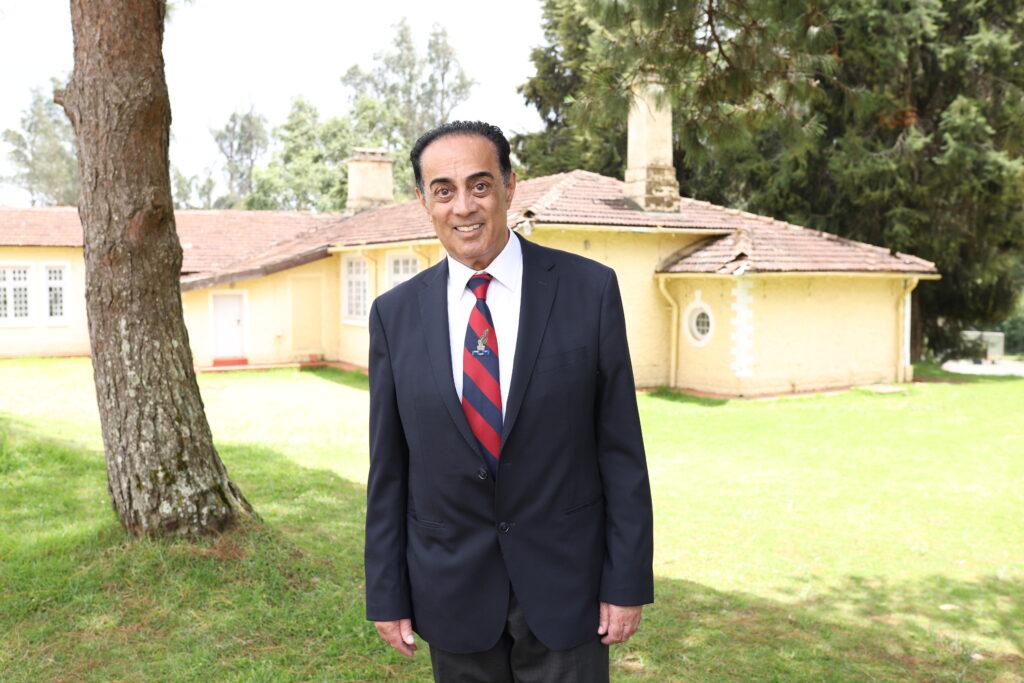
During 1968, some of the boys were introduced to the game of Golf by a parent and arrangements were made to take them to a Golf course every Sunday by the School van. Mac knew that this was something sophisticated and more in keeping with his assumption of superiority so he got himself a couple of clubs and started practicing, wearing his trademark smart suit on the lawn. He made a fool of himself and soon gave up preferring his comfort zone at the Lawley Institute.
Mac was thought to be close to a Miss Hensman, an English teacher for class 8. It is unlikely though that they indulged in anything other than occasional pleasant conversations. For Miss Hensman was a very short, very dark and very ugly woman who dressed shabbily and was a chain smoker. Unlike Mac, she wasn’t an Anglo-Indian but a Tamilian Christian. In any case, Mac’s sexual inclinations were questionable, for, considering he was handsome and had a prestigious position in a prestigious school, many a spinster would have agreed to any marriage proposal from him as it would have come with job related accommodation. It is entirely possible that he was gay and that is why erstwhile girlfriend Audrey dumped him.
As stated previously, my brother was unfortunately put in Mac’s care when he went up to Nilgiri House in 1960. The practice was that siblings were put in the same house and that is why in 1965 I had the misfortune to find myself in Mac’s custody. I have little doubt that had I been in any other house, my academic performance would have been vastly superior. I am sure I would have gone on to Medical School and qualified as a doctor.
Ironically, youngsters actually yearned to be in his House for the mythical reputation that Mac had obtained as this amiable Englishman. Far better Mac than the ‘country fellows’ who ran the 3 other houses! Reality was that he wasn’t near being English! His hue was as dark as mine and he had never been out of India. Even parents thought an English education under an Englishman was vastly superior to any other type of education. Reality was that he was a dirt poor man from a dirt poor Railway Colony whose father was in an orphanage, said father earned Rs 50 per month albeit many years previously, and Mac himself effectively got to his position as a teacher with a Masters degree financed entirely by the Church!
In 1972, a new Headmaster was appointed. There is little doubt that Mac coveted the job and was confident he would get it. After all, didn’t he play cards with the Generals? Weren’t all the parents including the Generals in awe of the school plays they saw their children participate in? However, the Governors had different thoughts in mind and quite rightly so. Mr. Vyas was appointed Headmaster. Mr Vyas, had two Masters degrees from the USA, had taught at Doon School, and had joined Lawrence School Lovedale in 1953, 3 years before Mac. Mr Vyas was an intelligent man and was the Senior Master who had left Lawrence in 1967 to take up a job at a minor boarding school in Mumbai called Hansraj Morarji School. Vyas had also been Mac’s predecessor as Nilgiri Housemaster. More than that, though, he was very hard working and could teach Maths, Physics, Chemistry and Hindi. As the Senior Master he had administrative experience that Mac couldn’t match! One doesn’t get that sort of experience gambling at the Lawley Institute and leaving one’s wards in the care of young thugs of 16! In addition to Vyas’s superior qualifications, experience, administration skills, and the fact that he had actually run a school as head, Vyas also took the Sunday Morning Hindu Prayer Meeting. A family man with his children in school even when he had a spell at Hansraj Morarji School, Vyas would have been in anybody’s books the right choice. By now, Hariharan who had been appointed Senior Master to replace Vyas had left on a sabbatical and Mac was appointed Senior Master in his place. As the Senior Master, Mac would have had to report to new Headmaster Vyas, a ‘country fellow’! Vyas’s appointment hurt Mac’s ego. Mac wouldn’t have been able to delegate his responsibilities to 16 year old thugs! Mac’s daily visits to the Lawley Institute would certainly have been noticed by Vyas who was no mug! He would have got the measure of Mac.
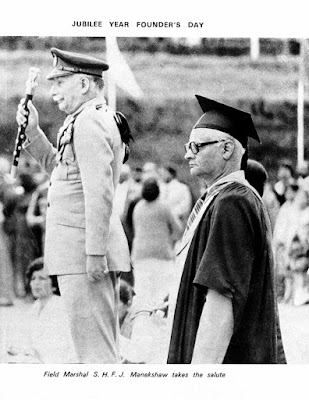
On the left is Field Marshal Manekshaw, Chief Gusset at ‘Founders’ in 1983. On the left of Manekshaw is Headmaster Vyas. Mac left Lovedale in 1975 and was on his 4th job, this time as Principal of KVS English Medium School, Virudhunagar. Then as now not many people had even heard of Virudhunagar. Mac would almost certainly have seen this photo and would have been seething with rage! How dare ‘country fellow’ Vyas be standing by a Field Marshall when he, Mac, was the one who ‘played cards with the Generals’! This was more evidence that Vyas was a far more suitable candidate for Headmaster of Lawrence School.
Mac – The Stalwart Who Never Was – Part 7- The Collapse Of Mac’s House of Cards.
Mac must have resented reporting to ‘country fellow’ Vyas. After all, Vyas hadn’t played cards with anybody, let alone Generals! So on the 27 of June 1975, Mac resigned. He was 50 years old. Notwithstanding the 19 years he spent in Lovedale, he couldn’t speak a word of Tamil, which was the local language. He had no home, and no money. This was down to his own stupidity. Indulging in the lifestyle I have set out over a period of 19 years meant he hadn’t saved any money to cater for his own retirement. Even at that stage, he could have partaken of ‘humble pie’ and stayed on at Lovedale albeit with a drastic change in lifestyle. He could have started saving, refrained from frequenting Lawley Institute and above all, carried out his duty of being ‘in loco parentis’ which is Latin for ‘in place of a parent’ and which is what a teacher is meant to be.
The only course open to Mac that would enable him to maintain his lifestyle would have been to get a job at another prestigious school such as Doon or Mayo College, but those schools would have attracted no end of talent and thus, a 50 year old bachelor with 19 years spent in South India wouldn’t have been able to compete with better qualified, younger candidates, particularly as his CV wouldn’t have shown any achievement other than good results for the subjects he taught but such good results would have been the norm for Doon and Mayo! Doon School would have laughed if Mac had applied for any job there. Doon’s Headmaster up to 1948 was Arthur Foot, formerly a Master at Eaton, he was succeeded by JAK Martyn formerly of Harrow School and formerly deputy to Arthur Foot. He served until 1966. From 1966 to 1970 the Headmaster at Doon was C.J. Miller, who was holder of an MA from Cambridge. Only then was an Indian (more accurately Anglo-Indian), Eric Simeon, appointed as Headmaster. Thus, there was never ever anybody at Doon who would have been impressed by Mac’s CV. Doon School obviously had a surfeit of good teachers of English as evidenced by Doon graduates Vikram Sheth and Amitav Ghosh. Other good communicators such as Mani Shankar Aiyar, Karan Thapar and the snivelling Ramachandra Guha are also Doon School products. I must add here that I differ completely in my outlook from Aiyar, Thapar and Guha; indeed I resent them! See my Page titled Other Prestigious Indian Boarding Schools and within that The Fraud of Doon School.
Now here is the first of many ironies: I was his worst student in terms of academic performance as I barely scraped through in my final year. Mac hated me and the feeling was mutual. I still have his handwritten letter for the 1967 academic year excoriating me and actually setting out that I was to be told not to throw my weight about! Had he once bothered to take me to one side and ask me if there were matters troubling me, he would have realised that he, Mac, could have put matters right. That was the time when the Africans were pressurising the British Citizen Indians such as my family to leave Kenya and at the same time, Britain was preventing its own Citizens from entering Britain merely because of our colour! So, aged 16, I was enduring a lot of uncertainties. Matters were not helped by Mac’s thuggish enforcers, the said John Koshy (I refuse to give him validation by calling him Ashok even 5 decades after the period) and the other enforcer, the Sri Lankan Protestant Mestizo called Ravindra Balasingham. The latter wasn’t gifted in any matter other than he was bigger built than the rest of the boys! These two slimy characters had in fact been given special status a year before they reached their final year by the aforementioned Kalli Jacob. Obviously, the more the enforcers, the better the lifestyle for both Mac and the thugs! It is inconceivable that Mac didn’t know about the thuggery that prevailed in his absence.
Early in 1968, British politician Enoch Powell made his infamous ‘Rivers of Blood’ speech and so life became even tougher not knowing what awaited me. I was still only 16 years old. A caring attitude from Mac would have made a world of difference. However, such a caring attitude cannot possibly be picked up whiling away time at the Lawley Institute. Had Mac once bothered to take me to one side and have a one-to-one, he would have known the circumstances and reassured me. However, there is no record of his ever, in his 19 years having such a meeting with anybody. Far from being the understanding, caring and compassionate Housemaster, Mac in fact adopted a hostile attitude to me. He frequently made derogatory references to my brother (who had passed out three years before me) and claimed that I was just like him in that I would act the ‘tough’ guy by surrounding myself with proper ‘tough’ boys but having no substance to me. There was absolutely no justification for such a hostile attitude; there was never ever any complaint against me of any sort of bullying! I recall one incident in particular: early in my final year, 1968, coaches were hired to take us to a venue hosting a hockey tournament. I happened to be standing near the entrance to one such coach and when ordered to go inside I did, and was first to do so, not by design but merely because I was standing nearest to the entrance. Mac lost his rag and shouted at me to get off asking, in a manner humiliating to me, who I thought I was and did I think my father owned the coach. The only reason he brought my father into his diatribe was vindictiveness. Mac was able to get away with heaping that kind of humiliation because he was cocooned in an isolated school up in the Nilgiri Hills protected from any possible wrath of parents! More important though was the fact that this was the portent of things to come in my last year in that institution. Ironically, my father would indeed have been able to buy such a coach, his father Vernon who spent most of his childhood in an Anglo-Indian orphanage in Nagpur and at his peak was paid 50 rupees per month would have been lucky to have been employed as a cleaner on that coach!
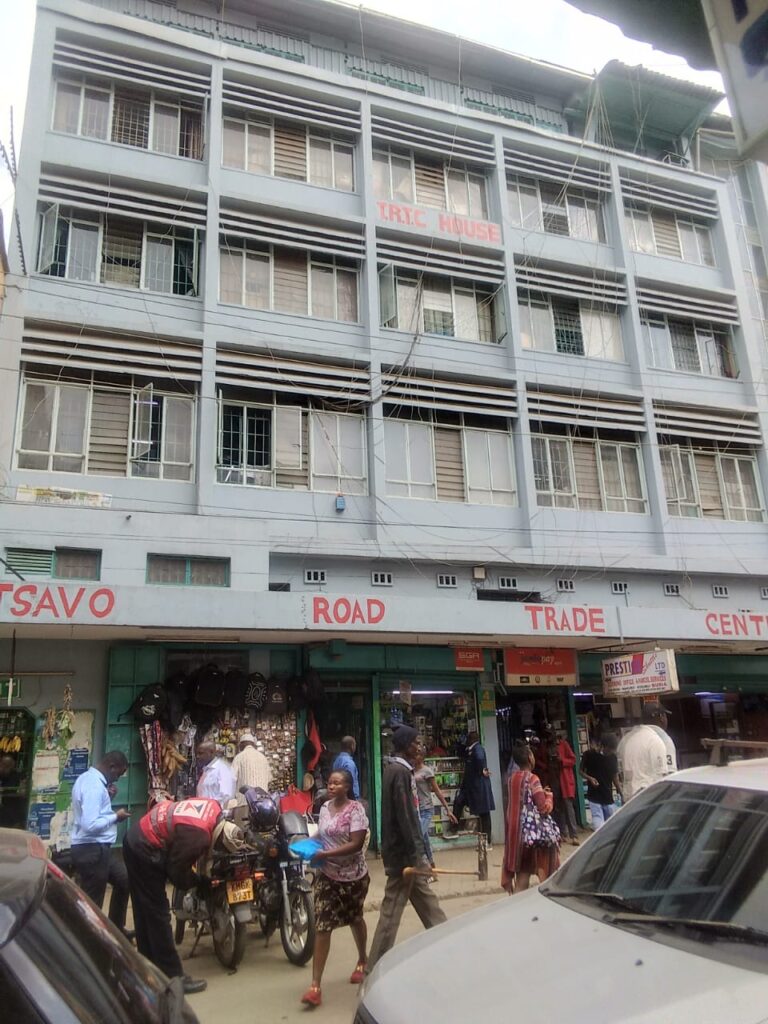
This photograph is of one of the buildings owned by my father. Constructed in 1959, it was known as Savani’s Mansion and was prominent throughout Nairobi. Even now some 65 years later one can see the 15 flats and 5 shops that were income generators and any one of which would have generated far more than Mac’s annual salary.
With the knowledge of the law I have now, I can say without hesitation that Mac could easily have been sued for gross negligence and would certainly have warranted dismissal. Gross Negligence is defined as ‘a conscious, voluntary act or omission in reckless disregard of a legal duty and of the consequences to another party’. However, all that is for another time. Needless to say Mac owed a duty of care, he failed to perform that duty and he could have foreseen the consequences.
Shortly after Mac left Lovedale, I was an Associate of the Chartered Institute of Bankers here in the UK. My name was published in the Times newspaper of London. I had a mortgage with the bank I was working for, and had purchased a house in London, while at the same time my pension was ‘going great guns’. Later, one of my proudest moments was seeing my name in the Financial Times of London as having qualified as an Associate of the Chartered Institute of Management Accountants. I would point out that for both qualifications, I studied at home and went to evening school rather than a Lawley Institute type of place! The reason for the difference in academic achievement between Lovedale and in the real world is simple: I was in Mac’s custody from 1965 to 1968. From 1965 to 1967, particularly in the period July 1966 to the end of 1966, I was subject to physical torture. Almost every single day was one to be feared. By the time in 1968 that I was in my final year, the damage had been done. After I was extricated from Mac’s ‘care’ by reason of my passing out from school, the physical threats and torture ceased and I was able to perform well academically. However, all that is the subject matter of a whole new chapter.
Some criticism must be made of K.I. Thomas, Headmaster of the School during the period up to 1971. See my page Kavoor Ipe Thomas . He should have known about Mac’s DAILY absences and done something about it. He could have and should have at least relieved Mac of his Housemaster duties but didn’t. His own ‘mystique’ would have been damaged beyond repair had he been a regular at the Lawley Institute and he would have lost all authority that he had over the staff and students. For the years my brother and I were at school, a dozen packs of plastic coated playing cards ‘Bonus’ brand, superior in quality to any available in India were delivered by one of us, my brother or I, to K.I. Thomas every year. Similarly, State Express 555 cigarettes were delivered to the K.I. Thomas as well as Mac. As mentioned, my father had agencies for both.
In the meantime, Mr Vyas retired from Lovedale after some 15 years as head and Mr. Bhatnagar had taken over. Mac thought he would get back his old job in Lovedale as he had brief interaction with Mr Bhatnagar a quarter of a century previously in 1961 when the latter had been to Lovedale on a British Council sponsored training course. Mac went to see Bhatnagar. One can surmise that Mac was desperate and peniless; why else would he have thought he would get his old job back at the age of 61, having for several years taught in schools where Telugu and Tamil were the main languages spoken? Luck though, or pity favoured Mac. Here is an extract of an email I received from Mr Bhatnagar on 7 October 2022:
‘I recommended him to Mr R K Krishna Kumar, MD of TATA Tea, who was on my Board of governors, and Mr Mac was offered the headship of TATA Tea School in Munnar, Kerala, where, I was told, he did a great job. I left Lovedale in 1991 to establish a school in Muscat, Oman, when I lost contact with Mr Mac.’
Truth is he didn’t do a great job! Tata School was for children from Kinder Garten to Standard 4. No Shakespeare, no Bernard Shaw, just basic English and no Lawley Institute anywhere near. There was, however a bar which Mac was at the moment it opened and stayed until chucked out. He became an alcoholic!
Munnar was a Malayalam speaking village (half the size of Virudhanagar). Here, outside of school (may be to some extent within it), Mac’s only solace was drink. His only students were children of the Tea Estate workers, far, far removed from the children of card playing Generals! Come 1990, Mac had to leave as Tata’s policy didn’t allow for employees beyond a certain age. I was on my third Managerial appointment, I had travelled to Europe, USA, Canada, Japan and Australia. Mac was 65. I had even gambled at what Mac would have considered the ultimate Lawley Institute, namely Caesar’s Palace in Las Vegas! Mac had no money, he didn’t have a pension, he didn’t have a house as he always lived in job-related accommodation and he had nowhere to go. Had Mac somehow made his way back to Mhow he would probably have become dependent on the Church and maybe even died on the streets as an alcoholic. Several of his ilk had been reduced to that as is evident from the documentaries in my Page: Anglo-Indian Documentaries and Research Papers. One such documentary evidences dead Anglo-Indians being picked up from the streets of Kolkata and given a burial by Mother Teresa’s Missionaries of Charity.
Here again, Mr Iyengar’s kindness came to the fore. He had by now successfully build a school Jeevana and that school was thriving. Mac was given a job there. Mac was living in rented accommodation and had a boy Krishna as a live in servant. In a desperate attempt to regain past glories, Mac visited Lovedale in April 1991 to ‘help’. However, the help of an alcoholic aged 66, one who had been out of touch with teaching at that school for 16 years wasn’t needed! So back it was to Madurai and Jeevana.
Mac – The Stalwart Who Never Was – Part 8- The Grim Reaper Strikes
On the Sunday 23 June 1991, Mac attended Church, got on his Vijay 50 cc bike to go home. He was involved in an ‘accident’ with a bus and was severely injured. As it happened, a Mr Gunnasena, a teacher who had worked with Mac was on the scene and held Mac’s hand. The last coherent words uttered by Mac was to this Mr Gunnasena and these were ‘Pray for me’. Mac was taken by the very bus with which he had an accident and admitted to a hospital run by an Old Lawrencian of the 1958 batch, Dr Mohan Nadar. Mac passed away in Mohan’s hands.
Below is a photo of Mr. Gunnasena
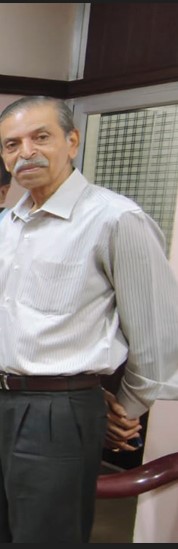
There was absolutely nobody to claim Mac’s body. Mac’s two nieces, Linda Dalal and Melanie Tawde were contacted but they didn’t want to know. Mac’s only possession of wealth were a few shares in Tata which he was given, as part of his remuneration package like all other employees. The two nieces were not interested.
Once again, Iyengar came to the fore. He got together with Valikappen the Old Lawrencian who used to host Mac at the occasional lunch and between them ascertained that there was a Railway Colony Catholic Cemetery. They arranged his funeral. There were only two who attended; Iyengar and Valikappen.
Thereafter, the grave was forgotten and left to crumble. 33 years later in 2024 in the course of my research I wanted to know what happened to the man who had such a profound effect on my life and in this respect, ultimately contacted Dr Ramesh Iyengar, son of our Mr Iyengar. Ramesh, a thorough gentleman is now the Director of Jeevana. After thorough enquiries he ascertained where the grave was and noticing that it had fallen into disrepair, had it refurbished.
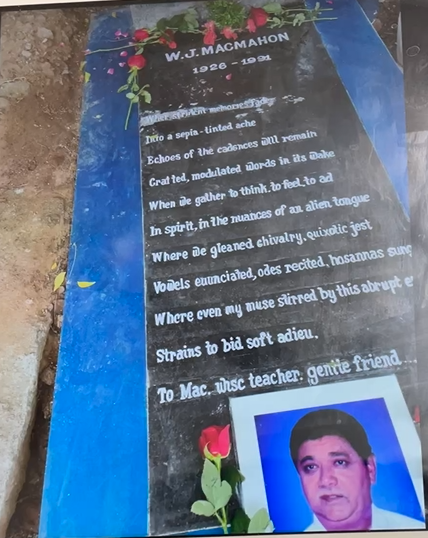
On the Vertical stone:
In Sweet Remembrance Of A Bygone Day There Is A Cherished Memory Time Cannot Take Away

On the Horizontal stone:

When strident memories fade
Into a sepia-tinted ache
Echoes of the cadences will remain
Crafted modulated words in its wake
When we gather to think. to feel to ad
In spirit, in the nuances of an alien tongue
Where we gleaned chivalry, quixotic jest
Vowels enunciated, odes recited, hosannas sung
Where even my muse stirred by this abrupt end
Strains to bid soft adieu.
To Mac. wise teacher, gentle friend

Note from Jitu: I am unable to trace the source of the words.
Above is the grave. Both, the grave and death notice in the newspaper give an incorrect date of birth. Mac himself had given the date of birth as 29 February 1926. There was no 29 February in 1926! The correct date of birth is 28 February 1925 as shown in his birth certificate! As also shown, his parents, Vernon and Margaret were married on 16 January 1924 which was a leap year but Mac couldn’t possibly have been born a month later!
Mac – The Stalwart Who Never Was – Part 9 – Epilogue
Here are other ironies. Some of the ‘pucca’ Indian teachers went on to do far better than the ‘pseudo’ English Mac. Raina, the Hindi and Sanskrit teacher took advantage of a scholarship and spent a year in USA (see para next but one). He went on to teach at the famous Doon School. Iyengar the Chemistry teacher and Mac’s saviour on many occasions, also went on a similar scholarship to USA and after a stint as Headmaster at Vikasa School in Madurai, started his own school, Jeevana. Reddy the PT and Telugu teacher initially joined Mac at Horsley Hills in his native Andhra and after that closed, started his own school, Chetna. Manoranjan Mukerji a Hindi teacher in Junior school started his own school (albeit that was a feeder school to Lawrence, which had removed the very junior classes), C. Mukerji, elder brother of Manoranjan Mukerji and headmaster of Prep School had acquired land quite near the school, I know, as during the June Holidays when I stayed back, I helped in clearing weeds from that land. Even the Headmaster, K. I. Thomas started a school in Chennai, and named Shishya, once he left Lovedale.
The extent to which the pucca Indians took off, miles ahead of RAILWAY COLONY man Mac can be gauged from some of the true stories below:
Naeem the Biology teacher started the trend whereby he got some sort of scholarship to go to the US and got a further qualification. He was followed by Tamil teacher Vydyianathan, Raina the Hindi and Sanskrit teacher, Hariharan the Maths teacher and Iyengar the Chemistry teacher. How all of them wangled scholarships to the USA I will never know but it showed a determination to progress in life. Although they got scholarships, not all their expenses were covered and they had to make tremendous sacrifices by borrowing against their meagre assets (example Iyengar mortgaged his motorbike), and in terms of using whatever savings they had.
Note, all the teachers mentioned in the paragraph above did not have, as did Mac, a life subsidised by the Church from virtually birth to grave! Hence, they were hard-working and responsible people!
Further examples of the ‘pucca’ Indian teachers outperforming pseudo Englishman Mac can be gauged from what happened to their offspring as well as to themselves. One of Raina’s sons became an Admiral in the Indian Navy, Hariharan the Maths teacher emigrated to Australia, Iyengar’s son did a PhD in USA, worked there for two years and returned to work as a scientist for the Indian Government. He has retired and has taken over the running of Iyengar’s school. Librarian (not even a teacher!) Mohanraj has a daughter settled in the USA and lives with another in Bangalore, a terrible Physics teacher Dorairaj who succeeded Mac as Housemaster of Nilgiri House had an offspring who graduated and settled in USA enabling Dorairaj to do the same, Biology teacher Naeem’s son also graduated and settled in USA where Naeem became a frequent visitor, even a thoroughly incompetent Maths teacher, Leonard, who tried and failed to migrate to Tanzania somehow wormed his way into the USA.
A good way of summing up the performance of Mac compared with the performance of the ‘pucca’ Indians, the sort we would refer to as ‘country fellows’ is that those men, who nobody yearned to be in the company of, who the ‘Generals’ would avoid like the plague, went miles ahead notwithstanding that none of them would have read Shakespeare or recited poems by Milton or Keats.
Below is a photo of Mr Iyengar, Mr Vaidyanathan, Mr Hariharan and Mr Raina at the Lincoln Memorial, Washington. All four were contemporaries of Mac. The four below worked hard, made many sacrifices and went on to do far better in life than Railway Colony Man Mac. Had it not been for Iyengar, Mac would have died a beggar in some street or other and his body would have been disposed of just as that of any other beggar’s unclaimed body!
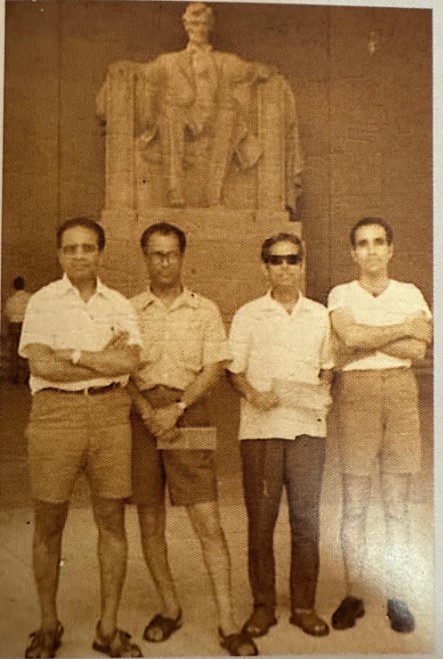
Mac – The Stalwart Who Never Was – Part 10: Low Expectations V Reality
Railway Colony bum Mac would have turned 100 on 28 February 1925. He died, aged 66 in 1991. My resentment of him will endure.
A teacher’s role is to foster a positive learning environment, promote critical thinking, guide student development and collaborate with colleagues and parents. Mac though, was never present to carry out such a role! He spent every waking moment outside his minimal teaching duties away from his wards gambling at the Lawley Institute and generally enjoying himself. While doing so, he left his wards aged 10 to 17 in the custody and care of child thugs. These abandoned wards were subject to unspeakable physical harm and mental anguish. Notwithstanding that Mac had left the school in 1975, I met Old Lawrencians from the 1990 batch who had never met him but who on mention of Mac immediately associated him with the Lawley Institute as well as a noisy motor bike! It is as if a ‘herd instinct’ developed wherein he was regarded as a hero figure! Peer group pressure meant that nobody would dare to point out his flawed character!
Mac had written me off and he had no right to do so. Had he carried out his teacher’s role as set out above, my achievements would have been vastly greater and certainly the colossal sums my father invested in my education would have been worthwhile. I say this as despite Mac giving me a ‘bum rap’ (defined for this post as an unfair judgement), I am setting out some of my achievements and take consolation in the fact that it was only a Railway Colony bum that was judging me and not a bona fide teacher.
Education
I am an Associate of the Chartered Institute of Bankers of England (ACIB)
I am a Chartered Management Accountant of England (ACMA)
Career
I started at the very bottom of the banking ladder and worked my way up retiring as a Senior Manager after 44 years service. I was generally classified as ‘outstanding’ and won many awards as a top performer. Here are random photographs of some of aspects of my working life:
In the photos below Jitu with on the left Lord Edward George, Governor of the Bank of England the highest ranking official in my profession of Banking and on the right with Sir Noel Quinn , CEO of HSBC Bank
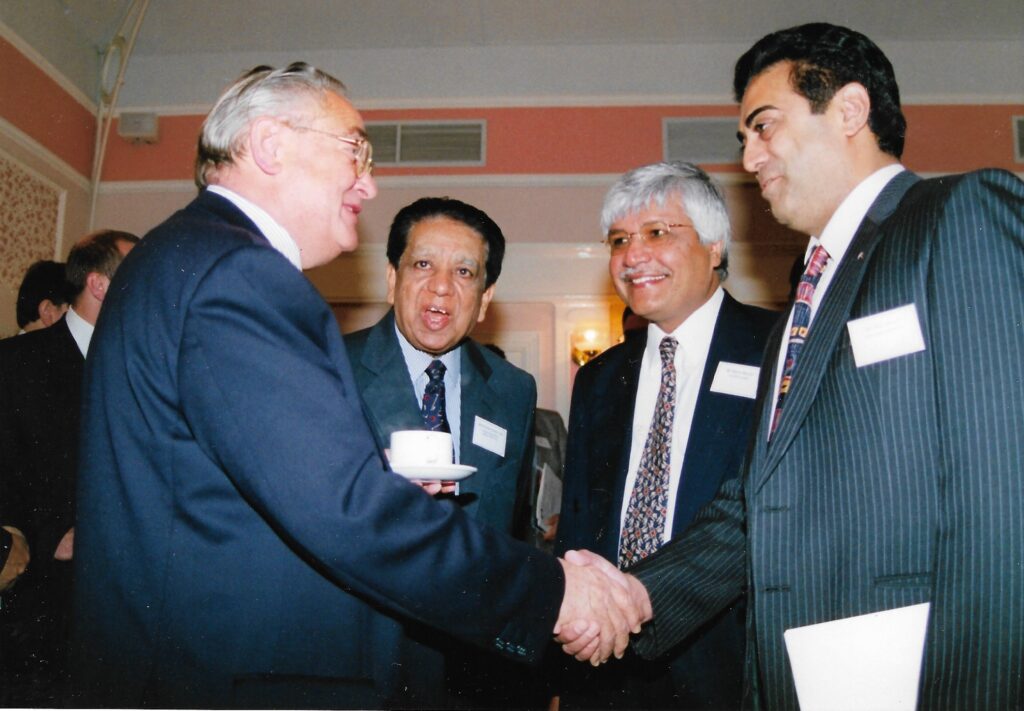
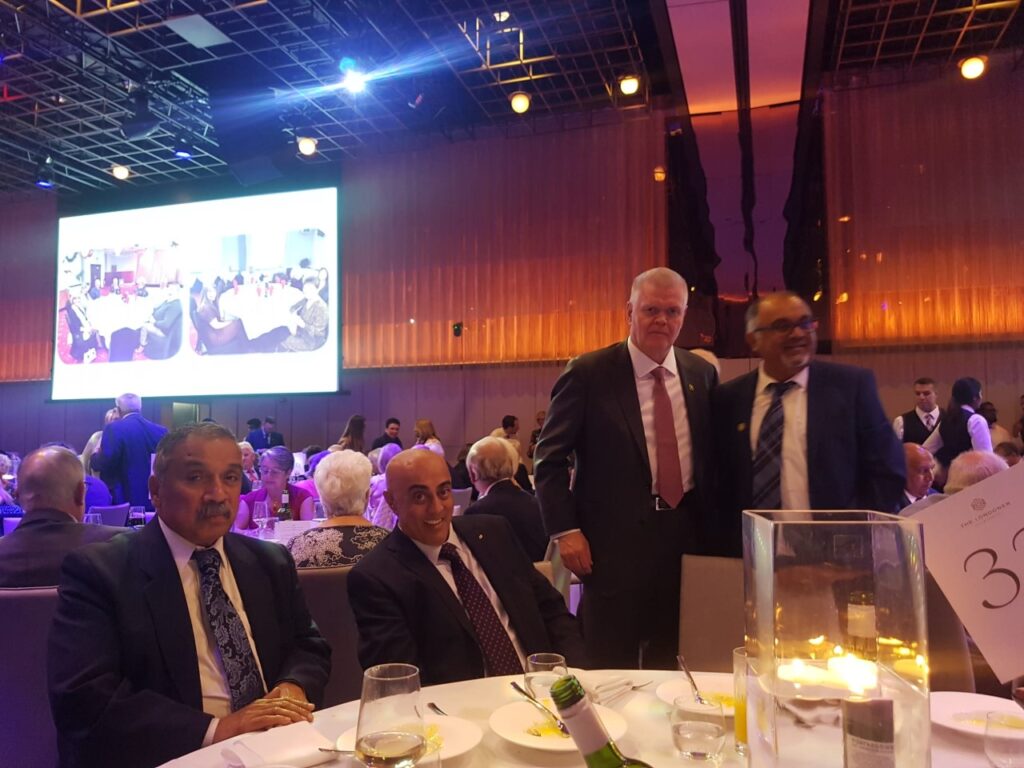
In the photographs below Jitu at award nights for top performers
Sports
Sports or any type of physical activity would have been anathema to Mac. He smoked like a chimney and it didn’t matter that he was doing so surrounded by children. As such he should have been the last person to have any sort of say or influence on team selection etc but what he made sure was that I was derided and as such excluded from most teams. For my part though, as soon as I could, bearing in mind my poor financial start having been booted out of Kenya penniless, I did take up sports and while I never excelled due to a relatively late start, I haven’t done too badly. Here are random photographs of my participation in sporting activities:
The first, 3rd and 4th photos are of my completing the London Marathon, the second is of my completing the Prague Marathon
The first photo below is of various running medals, mainly 10km and the second photo is of my Judo class in the 70s. The Sensei kneeling front row middle is Bill Jones, an Anglo Indian and one of the top practitioners of Judo in the world.
World Travel
Mac was generally skint, having spent what little he earned at the Lawley Institute. He stayed in his job related accommodation for most of the year including holidays for although the students were away, the administration staff, including the Bursar were kept busy and as such nobody objected to Mac being on School premises. He did venture out occasionally as he was seen by pupils lurking in Bombay, Calcutta and of course, his native Mhow. On the other hand, I, who Mac had written off have been to France, Germany, Holland, Denmark, Israel, Dubai, Kenya, Tanzania, South Africa, India, Indonesia, Singapore, Australia, Japan, USA and Canada. Here are just a few photographs:
The photograph below is Jitu at the Taj Mahal. As a 3rd generation Kenyan, visiting Taj Mahal was as good as visiting a foreign country. The message here is that the Railway Colony man Mac did his Masters degree in Agra but it is unlikely that he would have had much to do with the Taj Mahal. Agra had a thriving Anglo-Indian community and Mac would have been part and parcel of that.
The photographs below show Jitu is USA at the White House, Capitol Hill, Gettysburg and Liberty Hall in Philadelphia
The photographs below show Jitu at Niagara Falls, at Kyoto in Japan, at the Kodokan Judo centre in Tokyo and outside the famous Raffles Hotel in Singapore.

The photographs below show Jitu at the Sydney Opera House and at the iconic Sydney Harbour Bridge
The photograph below shows Jitu at Caesar’s Palace Casino, one of the world’s most famous casinos. I gambled and lost in one evening (I had budgeted for that) more than Mac, who would have given his right arm to be at that gambling joint, would have lost in 6 months at Lawley Institute.
Politics
I have been involved in politics but had to make the difficult choice between career and politics. The hours to be put in didn’t allow for total dedication to both. I chose career. Here are random photos related to politics.
In the photos below, the first one is Jitu with John Redwood, Cabinet Minister and the second with former Deputy PM Michael Heseltine.
Social Work
I have contributed what I could towards the community I am part of. Here are random examples:
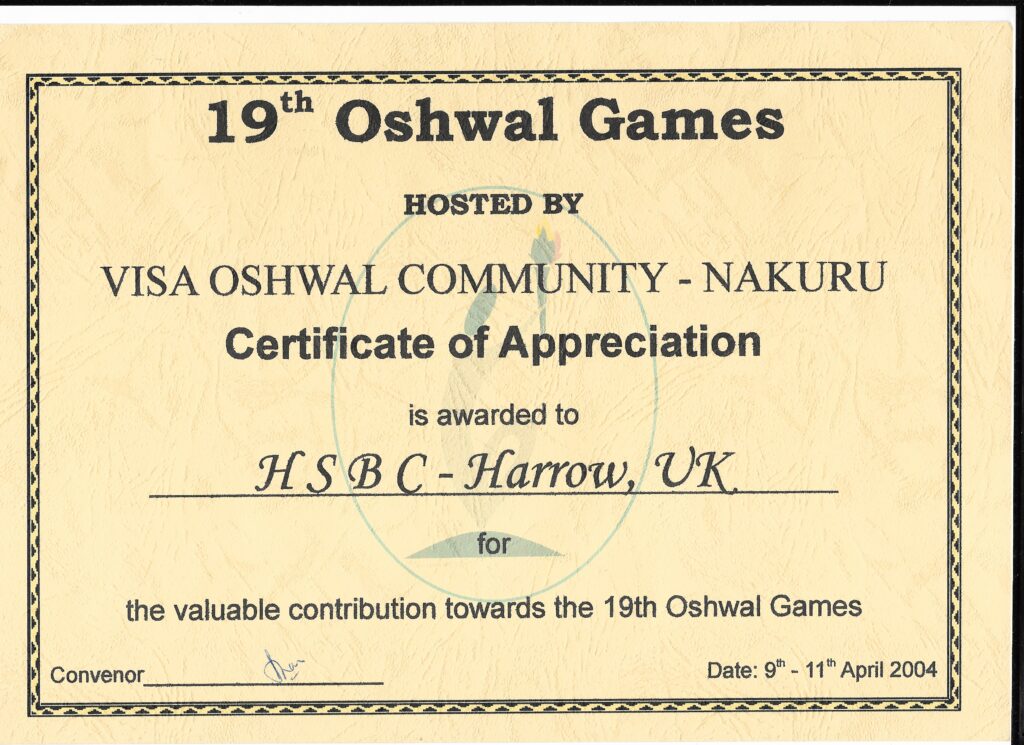
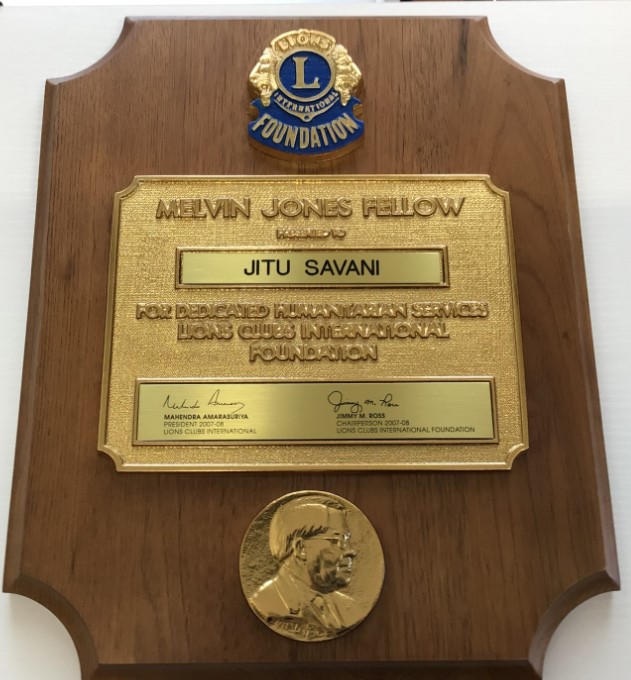
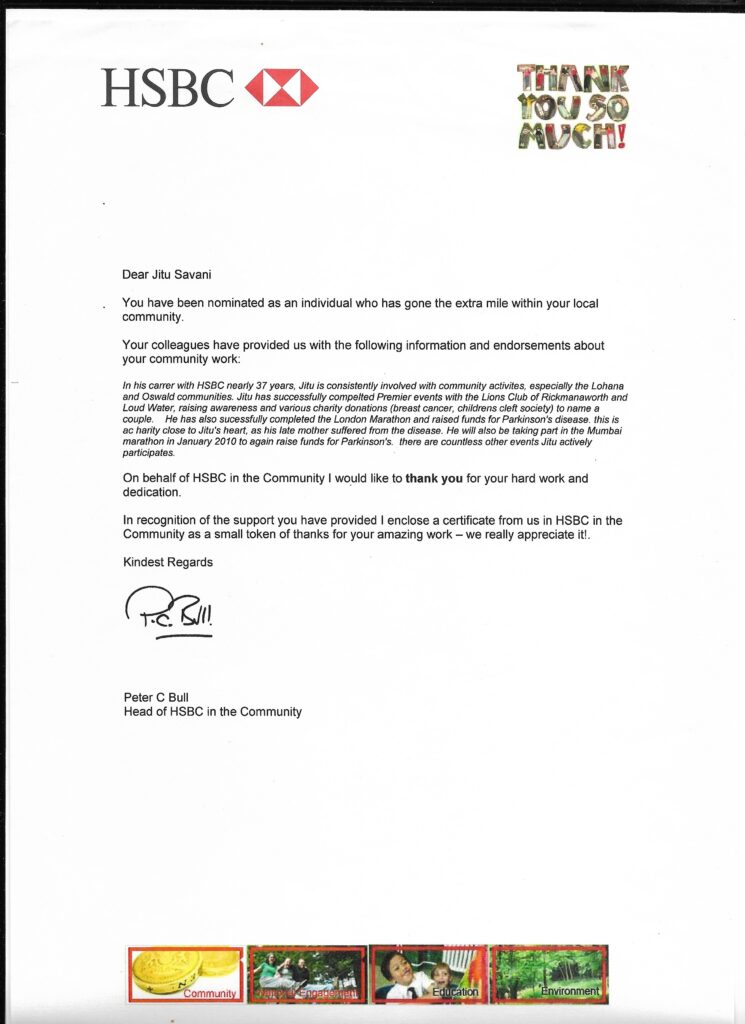
Conclusion:
Never accept being written off, and in particular never by a Railway Colony bum brought up on the charity of a church, or anybody of similar background. Those indulging in such writing off have reached the peak of their careers whereas you haven’t even started yours!
Mac – The Stalwart Who Never Was -Part 11- Mac’s Teaching V. Authentic Drama
Mac had a reputation for producing ‘matinee idols’ through the plays he put on at Founder’s celebrations. Simple fact is he only produced one play a year! He had poems read during English Literature classes but that was his job. Contrary to popular belief, he was not at all inspirational; classroom poems were read to get through the syllabus and pass the Indian School Certificate Exam. Ironically, he didn’t even attend debates involving poetry recitation! Not a single one of his pupils ever made it into the drama field in later life. One pupil, a classmate called Pratap Pothen became a Malayalam film star but that had nothing to do with Mac; it was just that his family were in the film industry!
I have personally been to many plays in the UK and indeed met the real stars. I saw Peter O’Toole act in Macbeth at the Old Vic Theatre in London, (O’Toole was a disaster), I have met Henry Fonda after his stint in Clarence Darrow, Yul Brynner after ‘The King and I’ , I have been to Kabuki Theatre in Tokyo. Looking back, what a character from a Railway Colony produced once a year wasn’t that impressive!
See authentic drama below and compare to the standard Mac reached. The clips below include scenes from Julius Caesar and the Winslow Boy, both of which were part of my syllabus in my final year. I had to also learn the poems Dulce et Decorum Est and In Time of Pestilence. I have included scenes from Henry V and Dead Poets Society in the hope that the little Tamil, Malayalee, Punjabi, Gujarati and other little boys who are decades later under the impression that what Mac taught and the methods he used are the ultimate in good teaching, will realise that Mac can at best be classified as ordinary.
The clip below shows the standard Mac should have aimed at. Mac simply lacked the skills required to train any student to the standard demonstrated!
See below a reading of Dulce et Decorum Est. I happen to have asked, casually what language the words were in. Mac told me French! Dulce et decorum est, is a Latin phrase that means “it is sweet and fitting to die for one’s country”: They are the words of Horace, one of the most important Roman poets. I would venture that none of Mac’s students knew that at the time of being taught or even now!
A clip from the Winslow Boy set out below will, I am sure convince all my classmates and younger school mates that Mac, in comparison to the clip set out below would be considered mediocre at best! The part of the Winslow Boy, played by a 9th standard junior called Arvind Bhandari has so affected the latter that he has ‘gone off his rocker’ convincing himself that only Mac recognised his genius. This is decades after he left school! Reality is that Arvind gave the impression of being a tiny little waif who was smaller in size than boys is standard 1. This explains perfectly why Mac was a hero to many like Arvind!
In the clip above look how inspirational a master could be! Mac wasn’t even a billion miles within reach of being this inspirational!
Finally, in this section, have a look at Laurence Olivier playing the part of Henry V. I put this clip here as Olivier’s wife Vivien Leigh was a Ooty girl who often performed at Assembly Rooms in Ooty. Mac’s teaching would not have matched the speech made by Laurence Olivier, not in a thousand years!
Mac- The Stalwart Who Never Was- Part 12 – The Bogus Obituary By Former Headmaster Bhatnagar
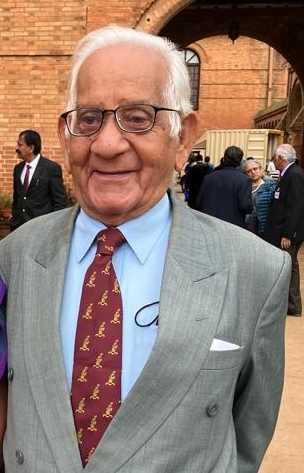
The words in black are Bhatnagar’s words, my comments are in blue.
HOMAGE TO A MANY SPLENDORED PERSONALITY
Mac’s tragic and unexpected death in July came as a tremendous shock to all those of us who knew him. He had always seemed so alive, so permanent and so indestructible. Perhaps, apart from his mother and brother, and his relatives, it was a greater shock for hundreds of his old students and for those, like me, who knew him well. (Bhatnagar starts with many untruths; Mac died in June, not July and none of his relatives even wanted to know. It wasn’t a shock to hundreds of his students, hardly a few!)
Bhatnagar couldn’t have known Mac well; Mac had left the school in 1975, 11 years before Bhatnagar joined as Headmaster. The fact that Bhatnagar met him previously in 1961 while on a training course in Lovedale doesn’t deter from the fact that the obituary is entirely made up of platitudes. Meeting somebody 30 years before his death, and that too briefly, couldn’t have informed on any quality Mac possessed. Each assertion will be demolished in the rest of the obituary that follows:
I just could not believe that he was no longer at Mr. Iyengar’s school at Madurai; even now it is almost impossible to believe that he is dead.
Long before Mac joined Iyengar’s school, he had stints in Horsley Hills, Andhra Pradesh from where he fled in haste, this was followed by a stint in Vikasa, a school where Iyengar was Headmaster, then to Kshatriya Vidyasala, Virudhanagar, followed by a stint in Tata Tea School Munnar which he was obliged to leave on reaching retirement age and only then, around 1990 did he join Jeevana, Iyengar’s school in Madurai, that too on sufferance as Mac, by then a dipsomaniac had nowhere else to go, and Iyengar was far too kind to ignore Mac’s plight.
When I first visited Lovedale in May 1961, very much a novice in school mastering, I spent about a week there and got to know Mac rather well. I was thoroughly impressed by him and the Founder’s play he had produced that year with Rukmani Reddy and Sunil Nehru in the lead.
So Bhatnagar met Mac for about a week in 1961 and 30 years down the line in 1991, he was able to write Mac’s obituary! Genius! The play was called The Happiest Days Of Your Lives and it was Khutub Hai who played the male lead. Sunil Nehru was Head boy a year later!
I ranked Mac with the other senior masters of the School, including my predecessor at Lovedale, Mr. Vyas, who was the Senior Master then, very experienced, rather staid and portly, scarcely approachable.
A completely made up description of Mr Vyas. Mr Vyas was known as Woody precisely because he was skinny and tall; not at all portly. He was certainly approachable! He had two Masters Degrees from USA, had taught at Doon School before Lovedale, was Headmaster of Hansraj Morarji School Mumbai before Lovedale, took Hindu Prayer Meetings, had his own children at the school and personally, I approached him from time to time to read letters written to me in Gujarati.
But then Mac was not another teacher. He was the colourful eccentric whose intensity and enthusiasm brought life and humour to all those who knew him. To many he was a valuable friend, a person with whom one could always talk and discuss one’s ideas and problems. Few could meet him and remain unchanged in some way, even if all they gained was an experience of a radically different outlook on life.
Meaningless platitudes. He was never there for anybody to talk to! He was off to the Lawley Institute 7 days a week , leaving at around 1.30 pm and returning at around midnight! What does ‘experience of a radically different outlook on life’ even mean except Bhatnagar had to stretch his meaningless words to fill space!
He enjoyed company, whether it was at the Lawley Institute or at the racecourse, or to converse long into the night amongst the many people he entertained at his residence. He enjoyed good food and an occasional tipple.
Bhatnagar must take us to be fools! Mac certainly frequented the Lawley Institute and the racecourse. Emphatically this was not because he enjoyed company but because he gambled! I was a frequent visitor to Nilgiri House in the years 1962/3/4 because my brother was in that house and I followed him into Nilgiri House in 1965 and stayed until 1968. 7 years in all. ON NOT A SINGLE OCCASSION DID HE ENTERTAIN ANYBODY AT HIS FLAT! ‘He enjoyed good food’ is rubbish made up by Bhatnagar; he presents no evidence! Indeed, he never ever reached the breakfast table in time as the exertions of the previous evening at the Lawley Institute rendered him incapable of getting ready in time! As for dinner, he was never there! He was at the Lawley Institute! As for the occasional tipple, Bhatnagar is talking more rubbish! Nilgiri Hills was a ‘dry’ area and one couldn’t get booze; certainly not on a teacher’s salary! Ironically, Mac became an alcoholic when he was in his post in Virudhunagar and more so in Munnar which is a ‘wet’ area but that was many years later!
Lovedale owes a tremendous amount to Mac. He was an excellent teacher absolutely devoted to the School. He was one of the most willing of men and one who hated to be idle. He loved doing things; he did everything well. He did them willingly, cheerfully and always to the utmost of his ability. Though he excelled in the classroom and as a director and producer of plays. Mac’s contribution to Lovedale was also outstanding in the co-curricular realm.
Lovedale owes nothing to Mac! He taught but that is what he was paid to do! He also had a housemasters allowance but got away with doing the bare minimum, leaving his wards in the care and custody of 16 year old thugs! He was ALWAYS idle! There wasn’t a single co-curricular activity he undertook! Why doesn’t Bhatnagar name a single co-curricular activity? How on Earth could he be outstanding in an activity he never undertook?
He was a man of extremely wide interests, and was endowed with a passionate desire to communicate his enthusiasm at every opportunity and in every possible way. If a suitable medium of communication already existed in the form of a society, a pulpit, a lecture platform, a debating floor, or even a classroom, he used it, adapting it as necessary. If there was none, he started one up.
What wide interests is Bhatnagar talking about? Mac had none and so how on Earth did Bhatnagar conclude that Mac was endowed with a passionate desire to communicate his enthusiasm?
Mac knew not only his subject; what is even more important, he knew his boys and girls. They knew him too. They knew he always gave of his best; inevitably he would be satisfied with nothing short of the best from them. To be fair, I do not think the boys and girls ever wanted to give anything less.
He knew his boys and girls like any other teacher; nothing special. He was a routine teacher, nothing to ‘give of his best’!
He had an amazing facility of getting on with his boys and girls and getting the best out of them. He ran Nilgiri House splendidly. The boys were always tidy and well cared for. Moreover they would go readily to him if they were in any sort of trouble.
He didn’t run Nilgiri House splendidly! He didn’t run it at all! He was away most of the day 7 days a week! The House was run by the 16 year old thugs he appointed! The boys were always tidy and well cared for? Says who? They were in constant fear and nobody dared to go to him! WHAT BHATNAGAR FAILS TO MENTION IS THAT MAC CEASED BEING HOUSEMASTER OF NILGIRI HOUSE IN MID 1972 OR SO AND WAS APPOINTED SENIOR MASTER ON A ‘BUGGIN’S TURN’ BASIS. FOR THOSE NOT FAMILIAR WITH THIS PHRASE, it describes a system where appointments, promotions, or opportunities are granted based on seniority of service, and by then Mac was the longest serving master, rather than merit, skill, or qualification. Mac had no administrative skill, you don’t get that at the Lawley Institute, and no merit. His Masters degree wasn’t required for the Senior Master’s job but his constant presence was; this was impossible as Mac was off to the Lawley Institute as soon as he was able to get away!
Here again Mac’s humour was a dominating factor; it was kind of leaven which permeated the whole House and made it one of the happiest communities at Lovedale.
Here Bhatnagar excels himself in his nonsensical writing. Mac was sarcastic which as Bhatnagar should know is the lowest form of wit. His use of the word leaven is meaningless, and to describe Mac’s house as one of the happiest communities in Lovedale is stretching incredulity to breaking point! Far happier were the boys in the Houses where the Housemaster was present all the time as opposed to Mac whose absenteeism should have been a cause for concern.
It was always a joy to visit Nilgiri House; everyone seemed so natural, friendly and relaxed. He was utterly sincere and genuine; he was nothing if not perpetually cheerful. He was ever ready to help as he was to believe the best. He was generous to a fault with all that he had and particularly with his time and energy. And, like all such people he was the soul of humility; it was his habit to esteem others better than himself.
What on Earth is Bhatnagar talking about? Who visited and when? Apart from ‘Founders’ there were hardly any visitors! Natural, friendly and relaxed? Balderdash! Always tense would be a more apt description! Mac ‘sincere’, ‘genuine’, ‘perpetually cheerful’? Which planet is Bhatnagar living in? ‘Generous to a fault’? From the Lawley Institute? ‘Soul of humility’? Is it even possible to compose more rubbish in describing Mac?
These were just some of the many parts of a complex but many splendored personality, a personality which one would know and appreciate, respect and love. Yet it was something which defied description. The more one tries to analyse it, the more intangible it seems to become. God does not make teachers like him anymore.
Bhatnagar has just written a detailed if vacuous obituary describing a complex and many splendored personality etc and yet says it was something which defied description! What defies description is the ability of Bhatnagar to spew industrial quantity hot air!
The best I can do to sum up his personality is to quote from Shakespeare’s Julius Caesar (V,v):
His life was gentle; and the elements so mix’d in him that nature might stand up and say to all the world ‘This was a man’.
No Mr Bhatnagar, Shakespeare or no Shakespeare, this was no man! He was a wimp, a remnant of Colonial India that I had the misfortune to encounter and he was the bane of my life!
Our deepest and most affectionate sympathies go out to his mother and brother. I do hope they will find comfort in the awareness of the very deep affection in which Mac was held by those who had the privilege of living and working with him during those twenty-five years or so when he was a quiet human dynamo at the heart of Lovedale.
When informed about his death, his nieces didn’t want to know. He was lucky in death that Mr Iyengar and an Old Lawrencian were around to give him a decent burial otherwise, this pauper’s (for that is what he was at death), body would have remained unclaimed. And no, it wasn’t 25 years or so, it was 19 years that he was at Lovedale!
B.S. Bhatnagar (Headmaster,
1986, 1991
Jitu Savani’s Obituary
Wilfred Joseph McMahon: A Betrayal of Trust and Grace
Wilfred Joseph McMahon was a man of contradictions—a brilliant teacher whose students excelled, yet a Housemaster who abandoned his charges to the lure of the casino. Every weekday at 1:30 PM, he would depart for the Lawley Institute, not returning until midnight. On weekends, he left even earlier. In his absence, the boys under his care were left to the mercies of older students who ruled through brutality and theft. Parents, labouring tirelessly to afford their sons an education, had no idea their children were being neglected—or that the man entrusted with their welfare was gambling away his own.
The school’s Headmaster, K.I. Thomas, likely knew. Yet he did nothing. And so McMahon’s vice was not just a personal failing—it was a dereliction of duty, a sin against the common good, and a scandal in the truest Catholic sense.
The Church’s Vision vs. McMahon’s Misuse of Grace
The Catholic Church invests in education not merely to cultivate intellect, but to form souls. Sacred Heart Church, which funded McMahon’s schooling from nursery to his Master’s degree, did so with the expectation that he would become a man of virtue, not just a man of letters.
Pope Benedict XVI once wrote: “Education is not and must never be considered as purely utilitarian. It is about forming the human person, equipping him or her to live life to the full.”
McMahon’s tragedy is that he squandered this formation. He was given the tools to lead, to nurture, and to sanctify—yet he chose the self-destruction of addiction over his duty. The Catechism (CCC 2291) warns:
The virtue of temperance disposes us to avoid every kind of excess: the abuse of food, alcohol, tobacco, or medicine. Those incur grave guilt who, by drunkenness or a love of speed, endanger their own and others’ safety.”
Gambling, when it consumes a man’s life and responsibilities, is no different.
St. Thomas Aquinas: The Corruption of Habitual Sin
Sin diminishes the good of nature, and habitual sin corrupts the soul’s order to its proper end. When a man knows the good and yet chooses against it, his will becomes enslaved. (Summa Theologica, I-II, Q. 85)
McMahon knew better. He was educated, even gifted—yet his enslavement to gambling distorted his moral compass.
The Sin of Complicity and Scandal
The Headmaster’s inaction compounds the tragedy. Canon Law (Can. 128) states that those in authority must correct negligence in their subordinates. By turning a blind eye, Thomas became complicit in the harm done to those boys.
Scripture reserves its fiercest rebukes for shepherds who abandon their flock:
“Woe to the shepherds who destroy and scatter the sheep of my pasture!” (Jeremiah 23:1)
McMahon was no common addict; he was an educated man, formed by Catholic institutions, who chose vice over virtue—knowingly trading souls for dice.
A Legacy of Wasted Potential
In the end, McMahon died as he lived—dependent on mercy. A former pupil, Subash Vallikappen and colleague Mr Iyengar who buried him acted with the very charity he had denied those in his care. His story is a warning: Education without virtue is an empty gift. The Church’s investment in him was meant to bear fruit—not just in exam results, but in lives transformed. That he left behind only ruin is his true epitaph.